
The Ant Control Complete Guide: How to Get Rid of Household Ants for Good
Ants are among the most common and persistent pests found in kitchens, pantries, and bathrooms. While a few ants marching on a countertop might seem harmless, they are social insects that live in large underground or wall colonies. Seeing a few workers means there are thousands more nearby, waiting to find your food.
For homeowners and business owners in Delhi NCR—spanning Delhi, Gurgaon, Noida, Greater Noida, Ghaziabad, and Faridabad—ant infestations are a year-round problem. High summer temperatures, monsoon rains, and indoor food crumbs attract ants, leading to large-scale infestations in apartments and villas.
This guide provides a comprehensive manual on household ant eradication. We cover ant biology, common species in India, professional treatment options (such as target-specific gel baits and non-repellent barrier sprays), DIY limitations, and safety checklists to keep your home ant-free.
Understanding Ant Colony Life Cycles and Castes
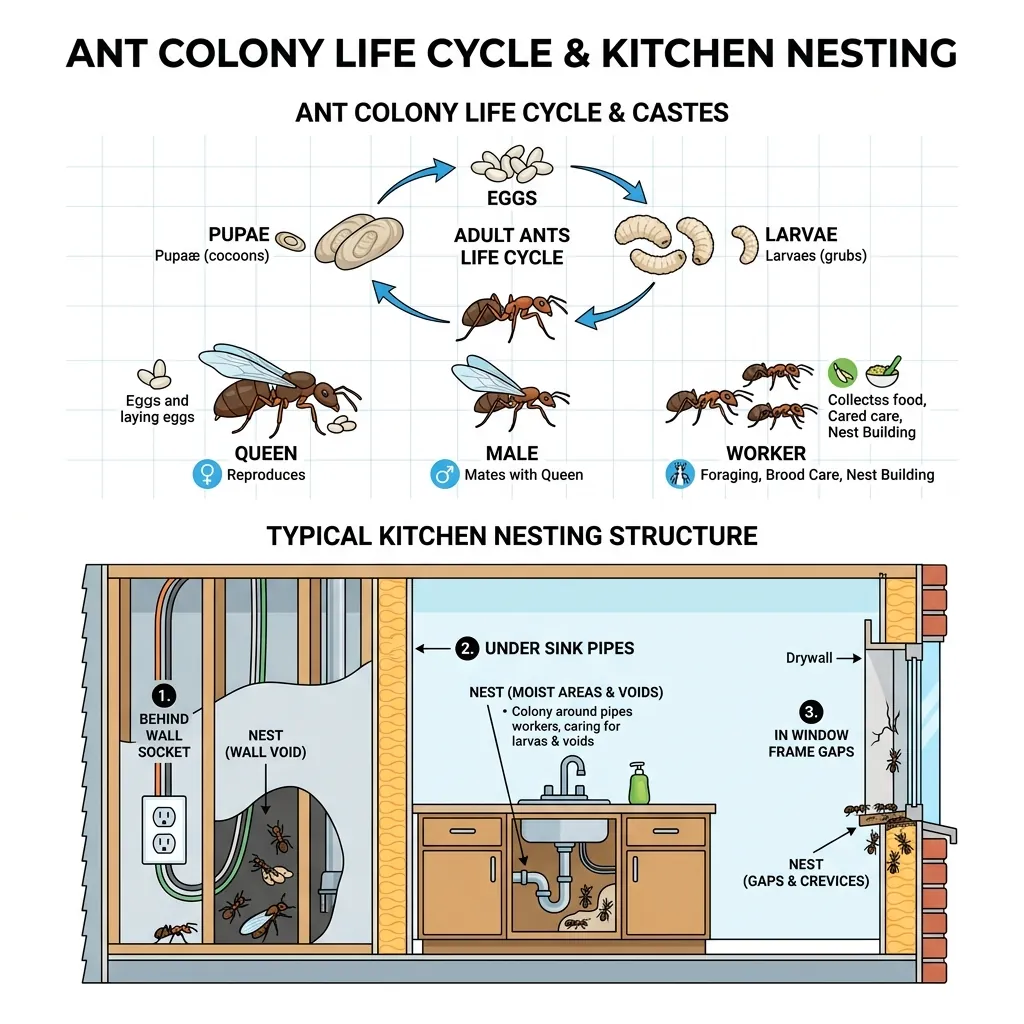
Ants belong to the family Formicidae and are highly organized social insects. A single colony consists of three distinct castes, each performing specific duties to ensure the colony's survival:
- The Queen: The founder and mother of the colony. She is larger than other ants and is responsible exclusively for laying eggs. Some species have colonies with multiple queens (polygynous), which makes them extremely difficult to control.
- Workers: Female ants that cannot reproduce. They are the ants you see foraging for food, building the nest, and caring for the eggs and larvae.
- Males: Winged ants whose only role is to mate with the young queens during nuptial flights (swarming). They die shortly after mating.
!Understanding Ant Colony Life Cycles and Castes
Early Signs of an Ant Infestation
Ants leave subtle indicators of their presence before setting up permanent indoor nests. Keep an eye out for these warning signs:
- Active Foraging Trails: Finding lines of ants marching along countertop edges, baseboards, electrical cords, or window sills.
- Frass (Fine Wood Dust): Finding small piles of fine sawdust or insect parts near wooden door frames or baseboards. This is a sign of Carpenter Ants boring nests inside structural wood.
- Soil Mounds (Ant Hills): Finding small piles of dirt or sand on floor tile joints, balcony corners, or garden pathways, indicating subterranean nests.
- Swarmers (Winged Ants): Seeing winged ants flying near windows or light fixtures inside your home. This indicates an established, mature colony nearby.
Health Risks and Property Damage: The Threat of Ants
While ants are generally viewed as less hazardous than rodents or cockroaches, they present significant risks to your home:
1. Food Contamination
Ants crawl over dirty surfaces, drains, and soil before walking on kitchen countertops and food packages. They can spread bacteria like Salmonella, E. coli, and Streptococcus, contaminating your food.
2. Structural Damage
Carpenter Ants do not eat wood, but they hollow out wooden structural pillars, window frames, and doors to build nesting galleries. Over time, this weakens the wood and can lead to expensive repairs.
3. Electrical Damage
Certain ant species are attracted to electrical currents. They nest inside switchboards, circuit breakers, and AC outdoor units, chewing on wiring insulation and causing electrical short circuits.
Why DIY Ant Treatments Often Fail
Many homeowners rely on store-bought chalk, aerosol sprays, and home remedies like vinegar or turmeric to repel ants. These DIY approaches rarely solve the problem for several reasons:
1. Aerosol Sprays Only Kill Foragers
Standard consumer sprays only kill the worker ants that are foraging on countertops. The queen and the remaining 95% of the colony remain safe deep inside the walls or ground, producing new workers daily.
2. Repellent Vapors Can Split the Colony (Budding)
Using strong chemical sprays can trigger a survival mechanism in certain ant species called "budding." The colony senses danger, splits into smaller groups, and establishes multiple new nests throughout your home, making the infestation worse.
3. Ant Chalk Leaves Toxic Residues
Insecticide chalk is often applied along floors and shelves where children and pets can easily touch or ingest it, posing health risks. It also wears off quickly.
The TrustXcare Professional Ant Eradication Protocol
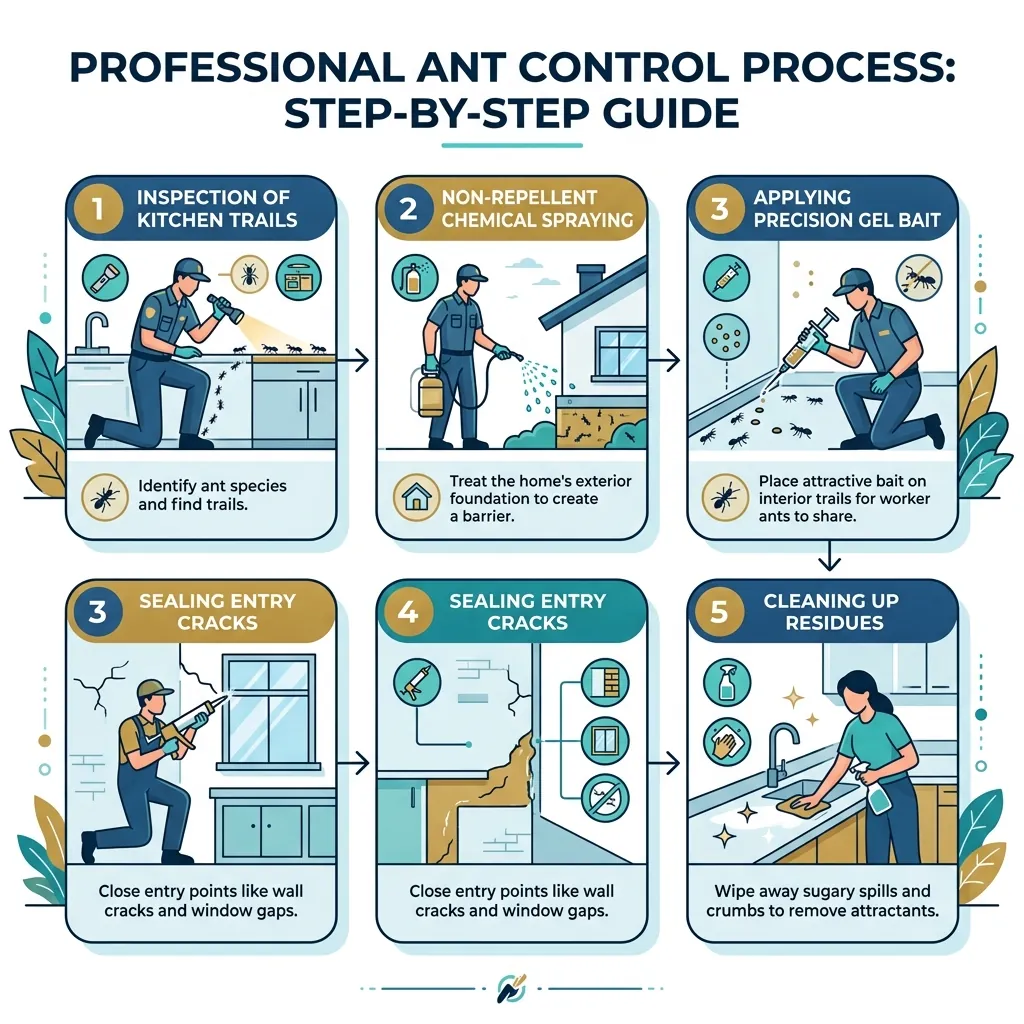
At TrustXcare, we implement an Integrated Pest Management (IPM) strategy that targets the heart of the colony—the queen. Our systematic protocol ensures complete eradication.
!Professional Ant Control Process
Step 1: Detailed Inspection and Species Identification
Our technicians perform a thorough survey to identify the specific ant species (such as Sugar Ants, Carpenter Ants, or Crazy Ants) and locate their trails and nesting entries.
Step 2: Target-Specific Gel Baiting
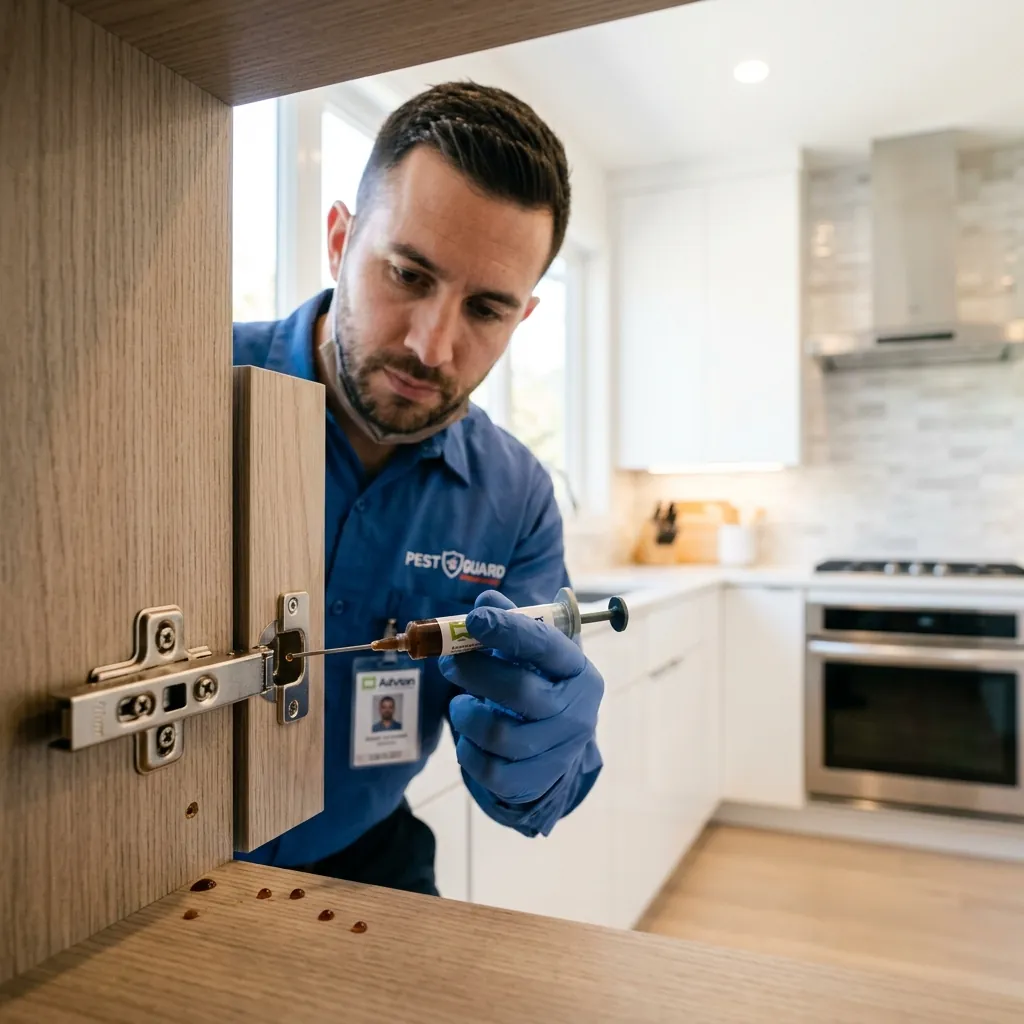
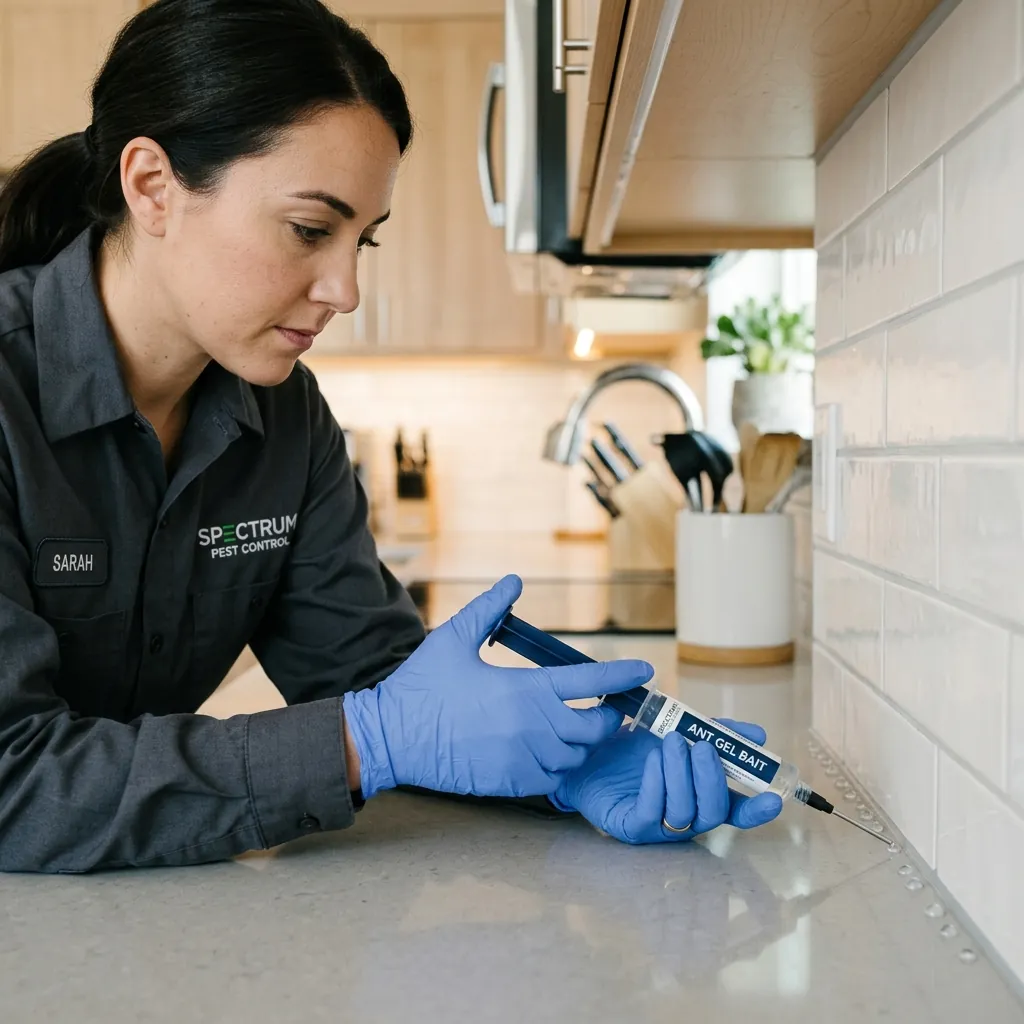
We apply specialized, highly attractive gel baits along active ant runways. Foraging worker ants eat the bait and carry it back to the nest, sharing it with the larvae and the queen (a process called trophallaxis), eliminating the entire colony.
Step 3: Non-Repellent Chemical Sprays
We apply advanced non-repellent residual insecticides along the exterior perimeter and wall cracks. Ants cannot detect this chemical barrier; they walk through it, pick up the active ingredient, and transfer it to other ants in the nest.
Step 4: Structural Sealing (Exclusion)
We identify and recommend sealing gaps around windows, doors, pipes, and wall joints to block future entry routes.
Step 5: Follow-Up Inspection
For heavy infestations, we perform a follow-up check to ensure all queens are eliminated and no new colonies have formed.
Spray Barriers vs. Gel Baiting
Understanding the differences between these two primary professional treatments helps you choose the right approach for your property:
| Feature | Spray Barrier Treatments | Gel Baiting (Colony Elimination) |
|---|---|---|
| Mechanism | Creates a chemical barrier that kills on contact | Attractive bait carried back to destroy the colony |
| Primary Use Location | Exterior perimeters, entry points, balconies | Kitchen counters, pantries, electrical cabinets |
| Effectiveness | Immediate barrier against incoming pests | Takes 3 to 5 days to eliminate the nest |
| Safety | Requires vacating areas until dry | Child-safe and pet-safe; applied in tiny drops |
| Split Colony Risk | High if repellent chemicals are used | None; ants willingly share the bait |
| Target Stage | Biting and foraging workers | The Queen, Larvae, and Workers |
Estimated Ant Control Charges in Delhi NCR (2026)
Ant control pricing depends on property size, infestation severity, and treatment methods. Below is an estimated price range for professional residential services:
| Property Size | Standard Spray Treatment (Single Service) | Premium Gel Baiting + Spray (Double Service with Warranty) |
|---|---|---|
| 1 BHK / Apartment | ₹999 - ₹1,399 | ₹1,599 - ₹2,199 |
| 2 BHK / Apartment | ₹1,399 - ₹1,899 | ₹2,199 - ₹2,999 |
| 3 BHK / Apartment | ₹1,899 - ₹2,499 | ₹2,999 - ₹3,999 |
| 4 BHK / Duplex | ₹2,499 - ₹3,299 | ₹3,999 - ₹4,999 |
| Independent Villa | ₹3,299 - ₹4,499 | ₹4,999 - ₹6,999 |
Note: These are estimated market rates. Exact quotes depend on the level of damage and specific structural factors. Contact TrustXcare for a free, customized site inspection and quote.
Post-Treatment Guidelines: How to Prevent Ant Return
To ensure the success of our professional treatments and prevent ants from returning, please follow these guidelines:
- 1Do Not Wipe Away Gel Baits: Leave bait drops exactly where the technician placed them. Let the ants feed on them undisturbed.
- 1Store Sweets and Sugars: Keep all sugary foods, honey jars, jams, and syrups in airtight glass or plastic containers. Wipe down jar exteriors to remove sticky residues.
- 1Clean Pet Bowls: Wash pet food bowls daily and do not leave wet pet food out overnight.
- 1Fix Water Leaks: Ants need moisture to survive. Fix leaky pipes under sinks and keep bathrooms dry.
- 1Clean Up Crumbs Daily: Vacuum floors and wipe kitchen counters daily to remove food sources.
Common Myths vs. Facts About Ants
Let's clarify some common misconceptions about ants:
- Myth: Pouring boiling water on an ant hill kills the colony.
Fact: Boiling water only kills surface ants. The queen is usually deep underground and survives, causing the colony to rebuild quickly.
- Myth: Vinegar repels ants permanently.
Fact: Vinegar wipes away scent trails temporarily, but once the vinegar dries, ants will find another path to the food source.
- Myth: Ants only enter homes during the summer.
Fact: While active in summer, heavy monsoon rains can flood outdoor nests, forcing entire colonies to seek shelter inside your home.
- Myth: Sweet foods are the only attractant for ants.
Fact: Depending on the season and colony needs, ants also seek proteins and fats, such as grease, meat scraps, and pet food.
Case Study: Carpenter Ant Eradication in a Noida Villa
The Problem: A homeowner in Sector 50, Noida, noticed small piles of sawdust (frass) appearing along a polished wooden door frame. Over several weeks, the wood became soft and hollow to the touch. The owner had sprayed household insecticide spray, but the dust kept appearing, and flying ants began emerging in the living room.
The Solution: The TrustXcare team inspected the property. We identified a Carpenter Ant infestation nesting inside the wooden frame. We used a non-repellent chemical treatment injected directly into the wood voids to reach the hidden galleries. We followed this with precision gel baiting along ant trails and applied a protective perimeter spray around the villa foundation.
The Result: The Carpenter Ant colony was completely eliminated. The homeowner replaced the damaged wood safely, and our perimeter treatments have kept the villa ant-free.
Frequently Asked Questions (20+)
1. Is the ant gel bait safe for pets and children?
Yes. The gel bait is applied in tiny drops inside electrical boxes, behind hinges, and under countertops where children and pets cannot reach. It is also formulated with low toxicity to mammals.
2. How long does it take to eliminate an ant colony?
Gel baits typically eliminate an entire colony, including the queen, within 3 to 5 days as the poison is shared throughout the nest.
3. Why are ants still active after the gel bait is applied?
This is normal. Foraging ants must eat the bait and carry it back to feed the nest. Do not kill or disturb these ants; let them return to the colony with the bait.
4. What is ant "budding"?
Budding is a survival mechanism where a colony splits into multiple nests when threatened by repellent chemicals. This is why standard sprays can make infestations worse.
5. Can ants damage my electrical wiring?
Yes. Certain species are attracted to electrical currents and can nest inside wall outlets and circuit breakers, chewing insulation and causing short circuits.
6. Do ants bite humans?
Yes. Some ant species, like Red Ants, can bite or sting when threatened, causing painful, itchy red bumps.
7. How do ants communicate with each other?
Ants use chemical scents called pheromones to lay down trails, alert the colony to food sources, and signal danger.
8. Why do ants enter my bathroom if there is no food?
Ants need water to survive. Bathrooms provide moisture from leaking faucets, damp bath mats, and condensation.
9. What is the difference between a termite and an ant?
Ants have a segmented body with a narrow waist, bent antennae, and wings of unequal length. Termites have a straight waist, straight antennae, and wings of equal length.
10. Can ants climb up high-rise buildings in Gurgaon?
Yes. Ants can climb along exterior pipes, utility cables, and structural walls to reach upper-floor balconies and apartments.
11. Does TrustXcare offer a warranty for ant control?
Yes. We offer a 3-month written warranty on our premium ant services, providing free re-treatment if ants return.
12. Can I use bleach to kill ants?
Bleach kills ants on contact and removes scent trails, but it does not reach the colony or prevent new ants from entering.
13. What attracts ants to my bedroom?
Food crumbs, dirty cups, sweet drinks, or damp spots near windows can attract foraging ants to bedrooms.
14. What are winged ants?
Winged ants are reproductive males and queens leaving a mature colony to mate and establish new nests.
15. How long do worker ants live?
Worker ants typically live for a few months, depending on the species and environmental conditions.
16. How long does the queen ant live?
Queen ants can live for several years, producing millions of eggs during their lifetime.
17. Can ants survive inside walls?
Yes. Wall voids provide insulated, protected spaces near plumbing pipes where ants can nest undisturbed.
18. Does rain affect outdoor ant treatments?
Heavy rain can wash away standard chemical sprays. However, we use water-resistant granules and non-repellent formulations for outdoor barriers.
19. Do I need to empty my kitchen cabinets before treatment?
For gel baiting, you do not need to empty your cabinets. For heavy infestations requiring spraying, we will advise you on cabinet preparation.
20. Do you serve all parts of Ghaziabad and Faridabad?
Yes. TrustXcare provides ant control and exclusion services across all major localities in Delhi, Noida, Gurgaon, Ghaziabad, and Faridabad.
Conclusion: Book a Free Inspection with TrustXcare Today
An ant infestation will not go away on its own. The longer the colony remains untreated, the larger it grows, increasing the risk of food contamination and property damage.
Reclaim your peace of mind and protect your home. TrustXcare is Delhi NCR's premier ISO-certified pest management agency, combining advanced baiting technologies, certified technicians, and written warranties.
Contact TrustXcare today to book a comprehensive site inspection and get a customized ant control plan.