

The Complete Cockroach Control Guide: How to Get Rid of Roaches and Keep Them Out
Cockroaches are among the most resilient, adaptable, and repulsive pests on the planet. Seeing a single cockroach scurry across your kitchen counter or bathroom floor is rarely an isolated incident. It is usually the first visible sign of a much larger, hidden infestation nesting behind cabinets, inside wall cracks, and near warm appliances.
For residents and business owners in Delhi NCR—including Delhi, Gurgaon, Noida, Greater Noida, Ghaziabad, and Faridabad—cockroaches present a major challenge. The region's hot summers and humid monsoon seasons create ideal conditions for cockroaches to multiply rapidly. If neglected, they contaminate food, trigger allergies, spread dangerous pathogens, and threaten the reputation of commercial establishments.
This guide provides everything you need to know to achieve a cockroach-free environment. Written by pest control experts, it covers cockroach behavior, health risks, treatment methodologies (like advanced gel baiting), DIY limitations, professional protocols, and prevention checklists.
Common Cockroach Species in Delhi NCR
While there are thousands of cockroach species worldwide, only a few commonly invade homes and businesses in India. Identifying the species is the first step in designing an effective elimination strategy:
1. German Cockroach (Blattella germanica)
Small, light brown or tan, with two dark parallel stripes running from the head to the base of the wings. They are the most common indoor pest species in Delhi NCR, thriving in warm, humid areas with access to water like kitchens, pantries, and bathrooms. They reproduce incredibly fast; a single female can produce up to 300 offspring in her lifetime.
2. American Cockroach (Periplaneta americana)
Large, reddish-brown, with a yellowish band behind the head. They prefer dark, damp, and warm environments. They are commonly found in sewers, drains, basements, and commercial kitchens, and can fly short distances when temperatures are high.
3. Brown-Banded Cockroach (Supella longipalpa)
Small, dark brown with prominent light-colored bands across the wings. Unlike German cockroaches, they prefer dry, warm locations. They are often found nesting inside electronic appliances, cabinets, bedroom furniture, and closets.
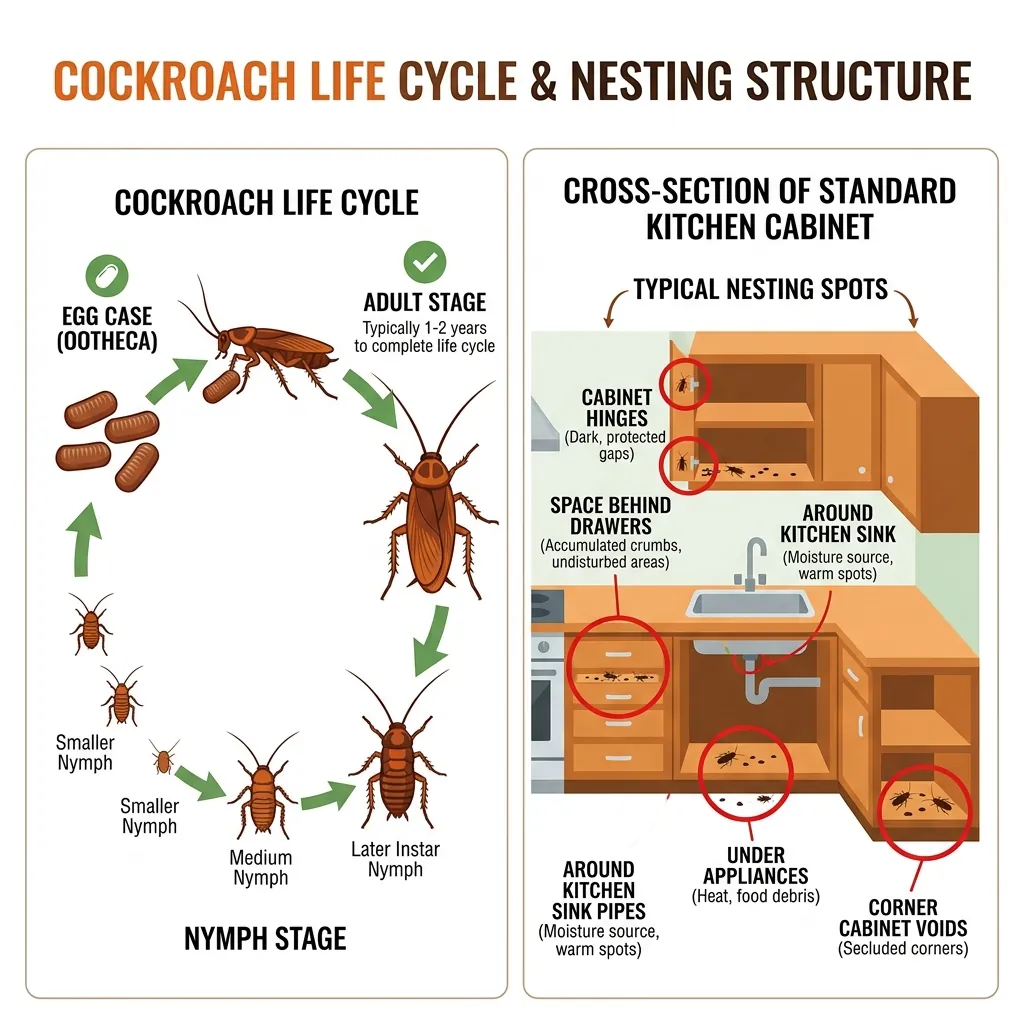
!Cockroach Lifecycle and Nesting Structure
Signs of a Cockroach Infestation
Because cockroaches are nocturnal and excel at hiding in dark, narrow voids, detecting their presence early requires vigilance. Look for these key warning signs:
- Fecal Droppings: Small cockroaches leave tiny black droppings resembling pepper flakes on cabinet shelves, drawer liners, or corners. Larger roaches leave cylindrical droppings with ridges.
- Egg Cases (Oothecae): Cockroaches carry or deposit purse-shaped, dark reddish-brown egg capsules called oothecae. Finding these capsules behind appliances, under sinks, or inside drawer joints is a sign of active breeding.
- Unpleasant Odor: A severe or long-standing cockroach infestation produces a musty, oily, and disagreeable odor. This smell is caused by pheromones released by the insects and can ruin food items.
- Shed Skins: As nymphs grow, they shed their hard outer skins multiple times. Finding translucent, insect-shaped skins in dark corners indicates an active colony is growing.
- Night Sighting: Cockroaches are nocturnal. If you turn on a kitchen light at night and see them scattering, or worse, see them crawling around during the daytime, the infestation is severe and hiding spots are overcrowded.
Health Hazards: Why Cockroaches Are Dangerous
Cockroaches are not just unsightly; they are serious hazards to your health and home hygiene. Let's look at the primary risks they pose:
1. Transmission of Pathogens
Cockroaches feed on garbage, sewage, and decaying organic matter. They pick up bacteria, viruses, and fungi on their legs and bodies, transferring them to food, preparation counters, and utensils. They are known vectors for diseases like Salmonella, E. coli, Dysentery, Cholera, and Typhoid.
2. Asthma and Allergies
Cockroach saliva, feces, and shedding skins contain powerful proteins that act as allergens. Inhaling dust contaminated with cockroach debris can trigger severe asthma attacks, chronic wheezing, sneezing, and skin rashes, especially in young children and elderly residents.
3. Food Contamination and Spoilage
As they forage, cockroaches deposit excrement, spit, and dead skin particles onto food packages and surfaces. Consuming contaminated food can lead to food poisoning, gastroenteritis, and digestive issues.
Why DIY Cockroach Control Often Fails
Many homeowners spend thousands of rupees on aerosol sprays, chalks, traps, and home remedies (like boric acid paste) to eliminate cockroaches. While these methods may kill individual insects, they rarely resolve the core infestation for these reasons:
1. Spraying Fails to Reach the Nest
Consumer aerosol sprays only kill the cockroaches you see. They do not reach the hundreds of others hiding deep inside wall cracks, electrical outlets, or cabinet joins. The colony continues to thrive and multiply out of sight.
2. The Repellent Effect
Most household sprays contain repellents. When you spray, the surviving cockroaches detect the chemical and retreat deeper into walls or migrate to adjacent rooms, spreading the infestation to bedrooms and wardrobes.
3. Rapid Chemical Resistance
German cockroaches reproduce quickly and have developed genetic resistance to many common chemicals found in off-the-shelf consumer sprays. Standard sprays often fail to affect them.
4. Safety Hazards
Using chemical sprays or chalks incorrectly near food prep zones, children's toys, or pet dishes poses risks of accidental poisoning. Certified professionals use targeted, low-toxicity gel baits applied safely in inaccessible crevices.
The TrustXcare Professional Cockroach Control Protocol
At TrustXcare, we implement an ISO-certified, multi-stage Integrated Pest Management (IPM) methodology. We combine advanced baiting technology with target-specific treatments to eliminate the entire colony safely and permanently.
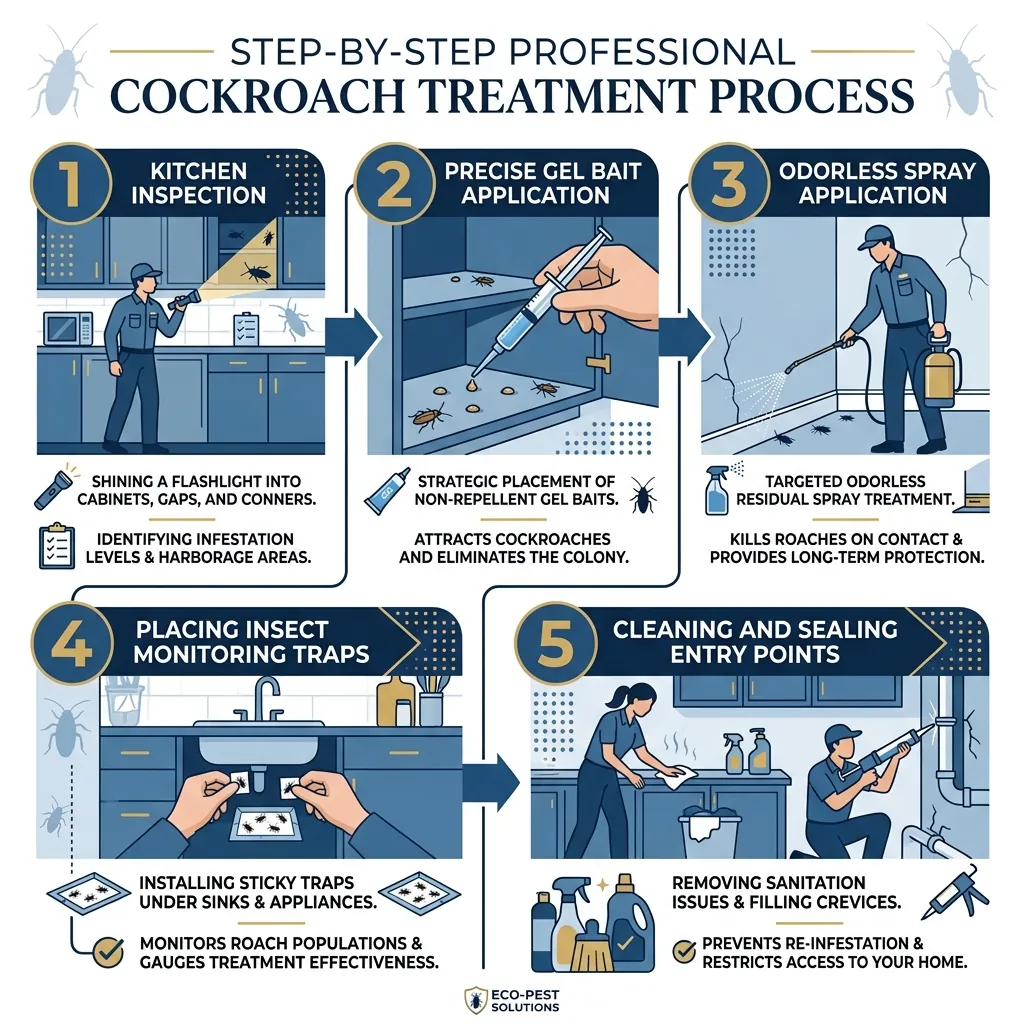
!Step-by-Step Professional Cockroach Treatment Process
Step 1: Detailed Kitchen & Property Inspection
Our certified technicians use flashlights and monitoring tools to inspect cabinets, drawer joints, appliance backboards, and pipe inlets to locate harborages and determine infestation severity.
Step 2: Strategic Gel Baiting Technology
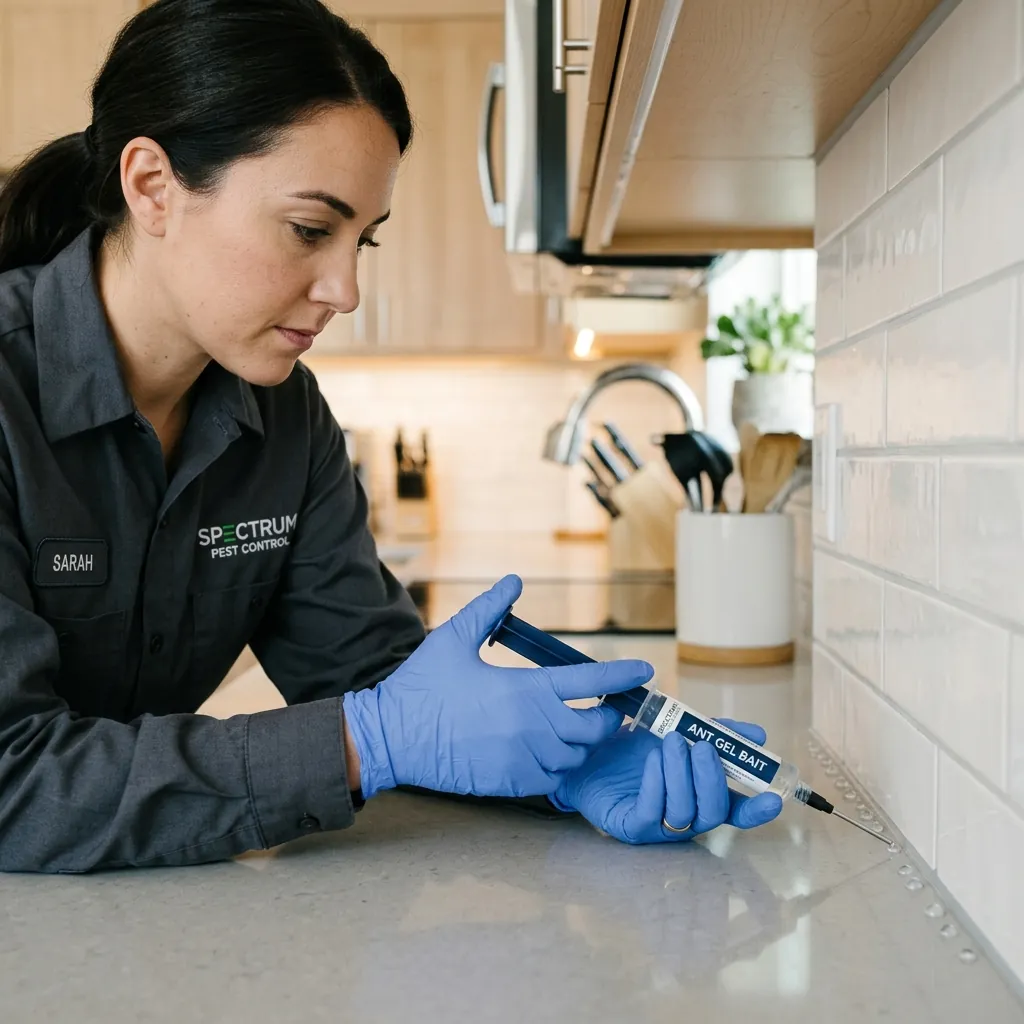
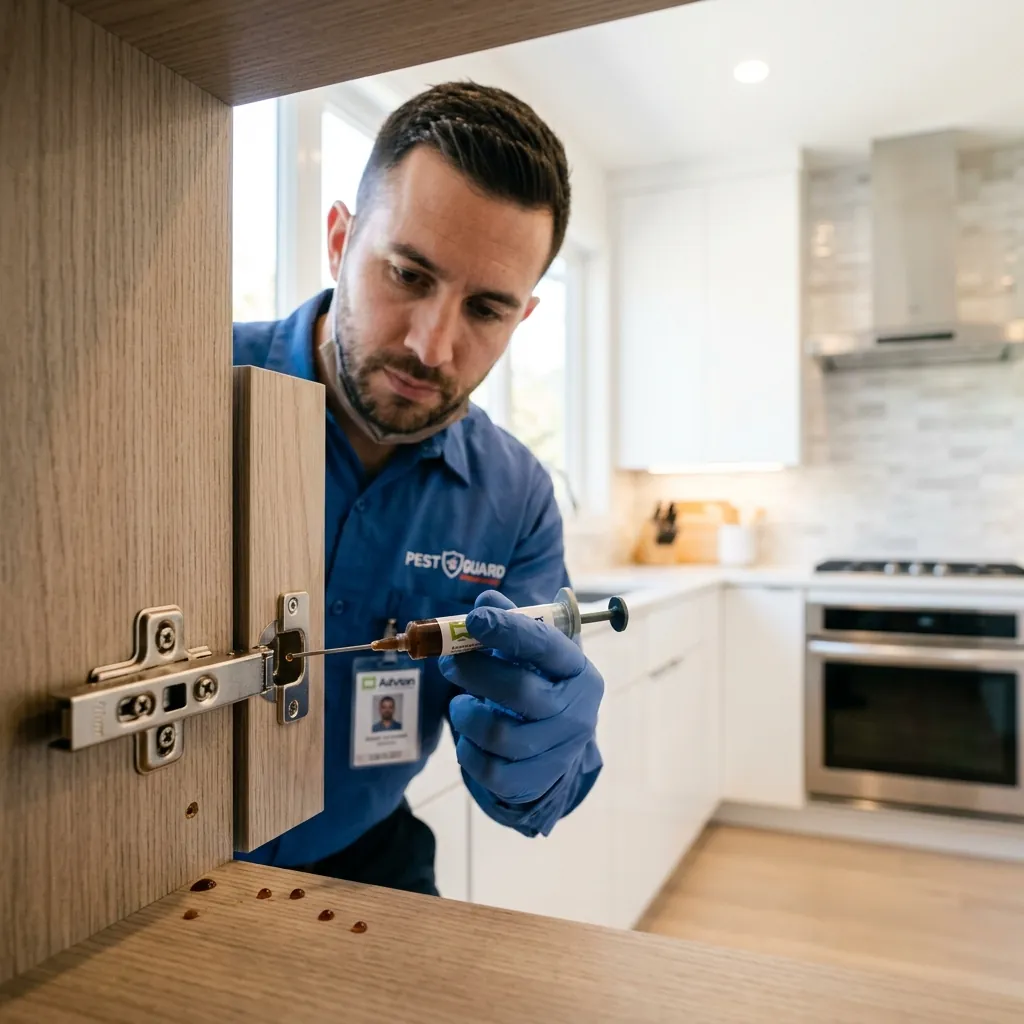
We apply dots of premium, non-repellent gel baits in cracks, hinges, and drawer corners. Cockroaches find the bait highly attractive, eat it, and return to their nest. When they die, other cockroaches consume their remains or droppings, passing the active ingredient throughout the colony in a secondary kill cascade that wipes out the nest.
Step 3: Targeted Odorless Spray Treatment
For immediate control of large populations, we apply an odorless, water-based, residual spray along baseboards, door frames, and drains. This spray dries clear and remains active for weeks, eliminating any cockroaches that crawl over it without releasing harmful fumes.
Step 4: Insect Growth Regulators (IGRs)
We use IGRs to disrupt the life cycle of the cockroaches. IGRs prevent cockroach nymphs from maturing into reproductive adults and sterilize adult females, stopping egg production and halting colony growth.
Step 5: Sealing and Preventive Recommendations
We identify structural entry points, such as gaps around pipes, and recommend sealing them. We also provide sanitation advice to ensure cockroaches do not return.
Gel Baiting vs. Residual Spraying
Understanding the difference between these two main professional cockroach treatments is key to selecting the right approach for your property:
| Feature | Gel Baiting | Residual Spraying |
|---|---|---|
| Mechanism | Attracts roaches to ingest bait, wiping out the nest | Kills roaches on contact or when they crawl over the residue |
| Odor & Fumes | Completely odorless, zero fumes | Odorless, but generates mild mist during application |
| Disruption | Zero disruption; no need to empty kitchen cabinets | Minor disruption; requires clearing kitchen counters |
| Target Area | Cracks, hinges, electrical panels, drawer sliders | Baseboards, drainage areas, balconies, wall borders |
| Efficacy | Excellent for German cockroaches in kitchens | Excellent for American cockroaches in drains and outdoors |
| Safety | High safety; applied in inaccessible crevices | High safety; requires drying time of 2-3 hours |
Seasonal Maintenance Checklist for a Cockroach-Free Home
Maintaining a cockroach-free home requires consistent hygiene and structural maintenance. Follow this quarterly guide tailored to Delhi NCR's seasons:
Spring (March - May): Sanitation Focus
- Pull out appliances (fridge, microwave) and vacuum accumulated crumbs and dust from the coils and floor.
- Wipe down inside cabinets and drawers with disinfectant.
- Store dry foods in airtight glass or plastic containers.
Monsoon (June - September): Moisture Control
- Fix plumbing leaks and dry under sinks. Cockroaches need moisture to survive.
- Clean bathroom and kitchen floor drains weekly and cover them with mesh plates.
- Dispose of wet kitchen garbage daily in covered bins.
Autumn (October - November): Exclusion Actions
- Inspect baseboards, door frames, and window panes for gaps and seal them with silicone sealant.
- Apply weather strips to the bottoms of exterior doors to block crawling insects.
- Seal gaps around AC conduits and plumbing entry points.
Winter (December - February): Appliance Maintenance
- Clean behind and underneath compressors of refrigerators and water purifiers, which provide warm shelter for roaches during cold months.
- Avoid storing cardboard boxes, paper bags, or newspapers, which provide food and hiding spots for cockroaches.
- Conduct a thorough check of all wardrobes and drawers.
Common Myths vs. Facts About Cockroaches
Let's debunk some common misunderstandings about cockroach control in India:
- Myth: Cockroaches only infest dirty homes.
Fact: While cleanliness helps, cockroaches can enter clean homes through plumbing lines, shared walls, or cardboard packaging in search of water and shelter. Once inside, they can survive on tiny traces of grease or glue.
- Myth: Bay leaves, cucumber slices, or peppermint oil keep roaches away.
Fact: Natural repellents might cause cockroaches to bypass a specific spot temporarily, but they do not eliminate an infestation. They do not kill cockroaches or stop reproduction.
- Myth: Step on a cockroach and you will spread its eggs.
Fact: Stepping on a cockroach kills it. While a female carrying an ootheca might release the egg capsule when crushed, the eggs inside require warmth and moisture to hatch and are unlikely to survive if crushed or discarded.
- Myth: Professional pest control means you must vacate your house for days.
Fact: Modern treatments use advanced gel baits and odorless sprays that are applied targetedly. You do not need to vacate your home or wash all your dishes after treatment.
Case Study: Eliminating Cockroaches in a Noida High-Rise Apartment
The Problem: A family residing in a high-rise society in Sector 62, Noida, had been dealing with a German cockroach infestation in their modular kitchen for over six months. They had spent over ₹4,000 on DIY chalks, traps, and sprays. The cockroaches continued to multiply, nesting behind the refrigerator, inside the microwave, and in cabinet hinges, eventually spreading to the wardrobes in their bedrooms.
The Solution: The TrustXcare team conducted a thorough inspection. We identified nesting hotspots inside modular cabinet hinges, behind drawers, and around refrigerator compressors. We implemented our Advanced Gel-IGR baiting treatment. We applied tiny dots of premium non-repellent gel bait in all hinges and drawer channels, sprayed odorless residual barrier spray along baseboards, and placed sticky monitoring traps under appliances. We also advised the client to seal gaps around the kitchen sink drain pipe.
The Result: The cockroach population dropped by 90% within 4 days. By the 10th day, the infestation was completely eliminated. Follow-up checks confirmed the apartment remained 100% cockroach-free, providing the family with peace of mind.
Frequently Asked Questions (20+)
1. Is professional cockroach treatment safe for pets and children?
Yes. TrustXcare uses premium gel baits applied inside cracks, hinges, and drawer joints where pets and children cannot reach. For liquid sprays, we advise keeping pets and children away from treated areas until they are dry (about 2 to 3 hours).
2. Do I need to empty my kitchen cabinets before a gel treatment?
No. You do not need to empty your kitchen cabinets for gel-based treatments. Our technicians apply gel baits directly to hinges, corners, and joints without disturbing your items. If a heavy spray treatment is required, we will ask you to clear items beforehand.
3. How long does a cockroach treatment take to complete?
A standard cockroach gel and spray treatment for a 3 BHK apartment takes about 45 to 60 minutes.
4. How long does it take to see results after the treatment?
You will notice a significant drop in cockroach activity within 3 to 5 days as the bait spreads through the colony. Complete elimination is typically achieved in 7 to 10 days.
5. Why do I see more cockroaches crawling around after the treatment?
Our gel baits and sprays contain active attractants and flush-out agents that draw cockroaches out of their hidden nesting sites. This is a normal sign that the treatment is working.
6. Can cockroaches live inside electronic appliances?
Yes. Brown-banded cockroaches prefer warm, dry areas and frequently nest inside warm electronics like microwaves, ovens, refrigerators, television sets, and water purifiers.
7. Does the cockroach spray leave stains or bad odors on walls?
No. We use advanced water-based, odorless formulations that dry clear without leaving stains on painted walls, wallpapers, or wooden cabinets.
8. How often should cockroach control be done in Delhi NCR?
For residential homes, we recommend a general pest control treatment twice a year (every 6 months). For restaurants, commercial kitchens, and office spaces, monthly or quarterly treatments are recommended due to higher traffic.
9. What should I do immediately after the pest control team leaves?
We recommend opening windows for 15-20 minutes to ventilate the home. Avoid wet-mopping or deep-cleaning the baseboard areas for 48 hours to allow the residual spray barrier to take full effect.
10. Does TrustXcare offer a warranty on cockroach services?
Yes. We offer a 3-month written warranty on our cockroach control services, providing free re-treatment if roaches return during this period.
11. How do cockroaches enter high-rise apartments in Noida or Gurgaon?
Cockroaches travel between apartments through shared plumbing ducts, wall cavities, and electrical shafts. They can also enter on cardboard boxes, grocery bags, or second-hand furniture.
12. What is the difference between German and American cockroaches?
German cockroaches are small, tan, and live indoors in kitchens and bathrooms. American cockroaches are large, reddish-brown, and live in sewers, drains, and basements, invading homes via drainage pipes.
13. Can cockroaches survive without food and water?
Cockroaches can survive for up to a month without food, but only about a week without water. Eliminating moisture sources like leaking pipes is critical to cockroach control.
14. What chemicals does TrustXcare use for cockroach control?
We use government-approved, low-toxicity gel baits (such as Fipronil or Imidacloprid) and public health-grade residual sprays from global manufacturers like Bayer and BASF.
15. Are ultrasonic pest repellers effective against cockroaches?
No. Scientific studies show no evidence that ultrasonic devices prevent, treat, or repel cockroach infestations.
16. Do I need pest control in a newly built house?
Yes. Construction sites often attract cockroaches, ants, and spiders due to left-behind moisture and debris. Preventive treatment before moving in ensures a clean start.
17. Can cockroaches bite humans?
Cockroaches are omnivorous, but they rarely bite humans. If they do, it is usually because food residue is left on hands or face, and the bites are harmless but can cause minor irritation or infection.
18. What are the common entry points for cockroaches?
Common entry points include gaps under exterior doors, cracks in baseboards, open windows, and around sink drain pipes.
19. Can I mop my floor after a cockroach spray treatment?
You can sweep the middle of the floor, but avoid wet-mopping or scrubbing within 2 inches of baseboards and walls for 48 hours to keep the residual spray active.
20. Do you serve all cities in Delhi NCR?
Yes. TrustXcare offers cockroach control services across Delhi, Noida, Gurgaon, Greater Noida, Ghaziabad, and Faridabad with local response teams.
Conclusion: Book a Free Inspection with TrustXcare Today
A cockroach infestation will not resolve on its own. The longer you wait, the larger the colony grows, leading to higher risks of food contamination, asthma flare-ups, and structural hygiene issues.
Protect your family's health and secure your peace of mind. TrustXcare is Delhi NCR's premier ISO-certified pest management agency, combining science-backed protocols, certified technicians, and transparent pricing.
Contact TrustXcare today to book a comprehensive site inspection and get a customized treatment plan.