

The Complete Rodent Control Guide: How to Keep Rats and Mice Out of Your Home
Rodent infestations are a major threat to homes and businesses alike. Rats and mice do more than just make scratching noises inside walls and crawl spaces; they pose severe health hazards, cause extensive property damage, and can ruin a business's reputation in days.
For families and business owners in Delhi NCR—spanning Delhi, Gurgaon, Noida, Greater Noida, Ghaziabad, and Faridabad—rodent control is a persistent challenge. Rapid urbanization, old sewage systems, and seasonal changes force rats and mice to seek shelter and food inside human habitats.
This guide provides a comprehensive manual on rodent control. We cover rodent biology, inspection methods, professional treatment options (such as rodent proofing, trapping, and tamper-resistant baiting), the hazards of DIY approaches, and checklists to make sure they never return.
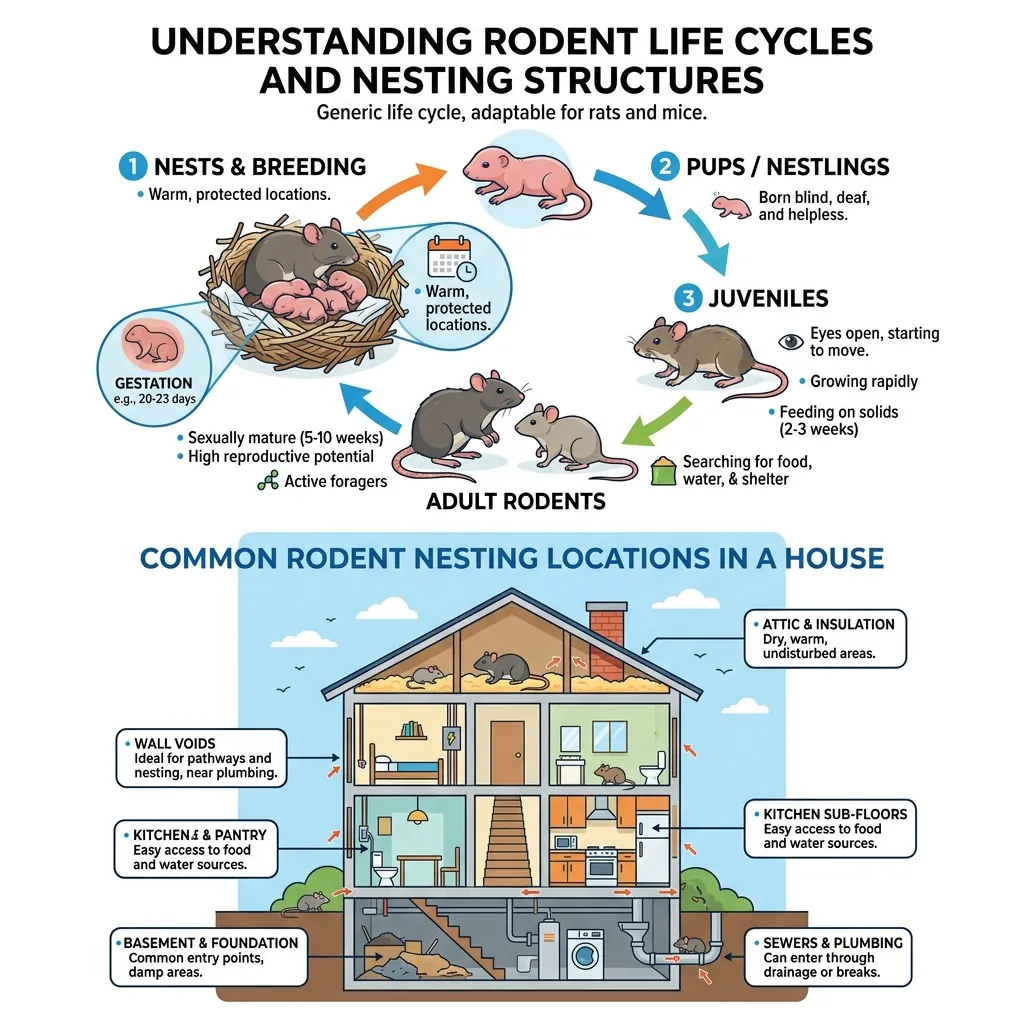
Understanding Rodent Life Cycles and Nesting Structures
Rats and mice are highly adaptable mammals with rapid breeding cycles. The two most common rodent pests in urban India are the Norway Rat (Rattus norvegicus) and the Roof Rat (Rattus rattus), alongside the common House Mouse (Mus musculus).
To understand why rodents are so difficult to eradicate, you must understand their lifecycle and behavior:
- Reproductive Potential: A single female rat can produce up to 5 litters a year, with each litter containing 8 to 12 pups. These pups reach sexual maturity in just 5 to 10 weeks, meaning a small entry point can lead to a massive infestation within months.
- Gnawing Habits: Rodents have incisor teeth that grow continuously throughout their lives. To keep them short, they must constantly gnaw on hard materials, including wood, plastic pipes, plasterboards, and electrical wires.
- Nesting Preferences: Rats are excellent climbers and burrowers. Roof rats nest in high areas like attics and ceiling voids, while Norway rats prefer burrowing in soil, under foundations, or inside drainage systems.
!Understanding Rodent Life Cycles and Nesting Structures
Early Signs of a Rodent Infestation
Because rodents are nocturnal and naturally avoid human contact, you are likely to notice signs of their presence before seeing an actual rat or mouse. Inspect your property regularly for these common indicators:
- Droppings (Scat): Rodent droppings are a clear sign of active infestation. Fresh droppings are dark and moist, resembling small black grains of rice. Mouse droppings are smaller (about 3-6 mm) with pointed ends, while rat droppings are larger (12-18 mm) with blunt or pointed tips.
- Gnaw Marks: Fresh chew marks on wooden furniture, plastic food packages, electrical insulation, or drywall corners indicate active rodents.
- Rub Marks (Grease Smears): Rodents have poor eyesight and navigate by running along walls. Over time, the oils and dirt from their fur leave dark, greasy smudge marks along baseboards and entry holes.
- Scratching Noises: Hearing scratching, scampering, or squeaking noises inside false ceilings, wall voids, or under floorboards, especially at night.
- Nesting Materials: Finding piles of shredded paper, fabric, cardboard, or insulation hidden in dark corners, under cabinets, or inside drawers.
- Pest Odors: A strong, stale smell of ammonia or urine in enclosed spaces like pantries, attics, or under-sink cupboards.
Health Risks and Property Damage: The Hazards of Rodents
Rodents are primary vectors for several dangerous pathogens and pose direct threats to safety and property:
1. Transmission of Deadly Diseases
Rodents carry and spread diseases such as Leptospirosis (through water contaminated with rat urine), Hantavirus, Salmonellosis, and Rat-Bite Fever. Their ectoparasites (fleas, ticks, and mites) can also transmit pathogens to humans and pets.
2. Electrical Fire Hazards
When rodents gnaw on wires inside walls or attics, they strip the protective insulation. This exposed wiring is a leading cause of unexplained electrical short circuits and house fires.
3. Structural and Pipe Damage
Rats can chew through PVC water pipes, causing hidden water leaks, wood rot, and structural damage that costs thousands of rupees to repair.
4. Food Contamination
A single rodent can contaminate ten times more food than it eats by leaving droppings, urine, and hair behind in pantries and kitchen cabinets.
Why DIY Rodent Control Often Fails
Many homeowners rely on store-bought snap traps, glue boards, and chemical rodenticides to manage rats. These DIY efforts usually fail due to several factors:
1. Neophobia (Fear of New Things)
Rats are highly suspicious of new objects in their environment. If you place a trap directly in their path, they will actively avoid it for days, rendering the trap ineffective.
2. Trap Shyness
If a rat is injured by a poorly set snap trap or eats a non-lethal dose of bait, it will learn to avoid all traps and baits in the future. This "trap shyness" makes professional removal more difficult.
3. Improper Bait Selection
Using ineffective bait or handling traps with bare hands leaves a human scent that alerts rodents. Professional baiting requires clean handling and knowledge of regional food preferences.
4. Failure to Seal Entry Points
Simply trapping the rats inside your home is a temporary fix. Unless you identify and seal every entry hole (some as small as a coin), new rodents will continue to enter.
The TrustXcare Professional Rodent Exclusion & Control Protocol
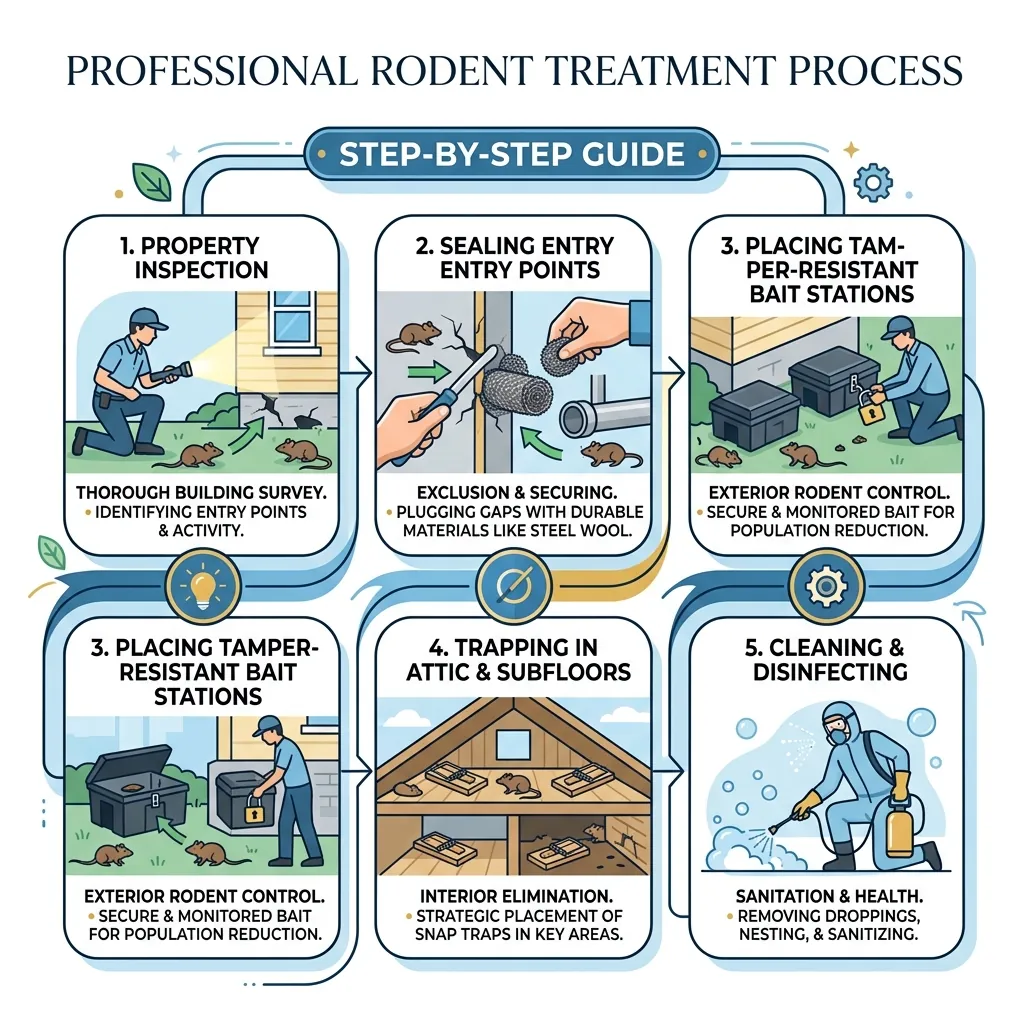
At TrustXcare, we implement a comprehensive Integrated Pest Management (IPM) methodology. We combine structural exclusion (proofing) with targeted trapping and tamper-resistant baiting to eliminate existing populations and prevent future entry.
!Professional Rodent Treatment Process
Step 1: Complete Property Survey
Our certified technicians inspect your property to identify active nests, feeding areas, runway paths, and structural entry holes (such as gap margins under exterior doors, utility pipe entries, and roof junctions).
Step 2: Exclusion (Rodent Proofing)
We block all potential entry points using durable materials that rodents cannot chew through, such as heavy-duty steel mesh, metal sheets, and concrete mortar. We focus on sealing gaps around pipes and installing door sweeps.
Step 3: Tamper-Resistant Baiting (Exterior)
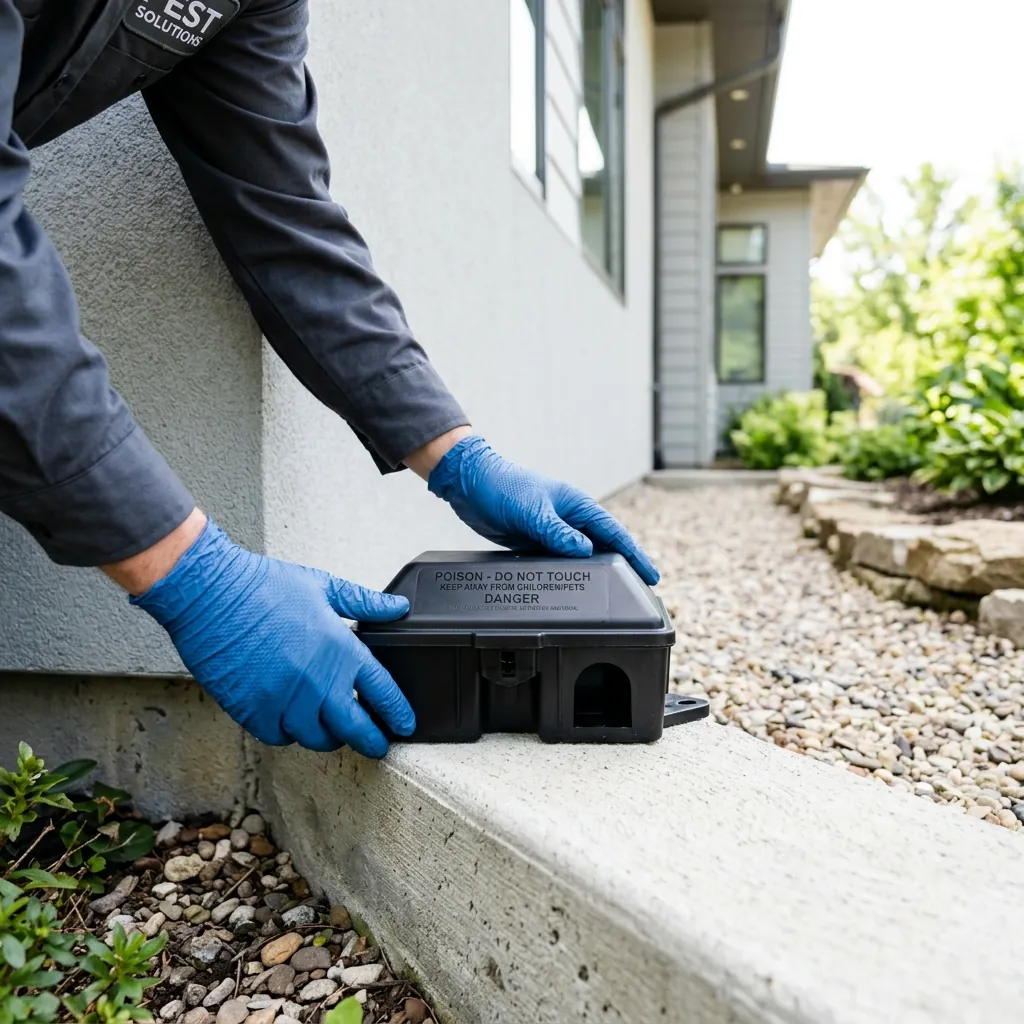
We place locked, tamper-resistant bait stations along the exterior perimeter of your home or building. These stations protect the bait from rain, children, and pets, allowing rats to feed safely outside before they enter.
Step 4: Targeted Trapping (Interior)
Inside living areas, we place specialized snap traps, multi-catch traps, and glue boards along rodent runways and inside ceilings. We do not use chemical poisons indoors to prevent rodents from dying and decaying inside walls.
Step 5: Sanitization and Monitoring
After eliminating the rodents, we clean and sanitize the nesting areas to remove droppings, urine, pheromone trails, and health risks. We also set up monitoring stations to detect any new activity early.
Trapping vs. Chemical Baiting
Understanding the differences between trapping and chemical baiting helps you choose the right approach for your property:
| Feature | Trapping (Mechanical) | Chemical Baiting (Rodenticides) |
|---|---|---|
| Mechanism | Captures or kills rodents instantly | Rodents ingest bait and die after 3 to 5 days |
| Primary Use Location | Indoors (kitchens, attics, bedrooms) | Outdoors (perimeters, gardens, garbage areas) |
| Pet & Child Safety | Safe when placed in out-of-reach areas | Requires locked, tamper-resistant stations |
| Carcass Control | High; easy to locate and remove | Low; rodents may die inside wall voids |
| Speed of Action | Instantaneous | Delayed (prevents bait shyness in colonies) |
| Proofing Integration | Excellent for catching resident rodents | Best for managing regional populations |
Estimated Rodent Control Charges in Delhi NCR (2026)
Rodent control pricing depends on property size, entry point repairs (exclusion work), and the duration of the monitoring contract. Below is an estimated price range for professional residential services:
| Property Size | Standard Trapping (Single Treatment) | Premium Exclusion + Multi-Visit Treatment (With Warranty) |
|---|---|---|
| 1 BHK / Apartment | ₹1,299 - ₹1,799 | ₹2,499 - ₹3,499 |
| 2 BHK / Apartment | ₹1,799 - ₹2,499 | ₹3,499 - ₹4,499 |
| 3 BHK / Apartment | ₹2,499 - ₹3,299 | ₹4,499 - ₹5,999 |
| 4 BHK / Duplex | ₹3,299 - ₹4,499 | ₹5,999 - ₹7,499 |
| Independent Villa | ₹3,999 - ₹5,499 | ₹7,499 - ₹10,999 |
Note: Heavy exclusion work (requiring extensive masonry, metal plating, or pipe mesh installation) is priced separately based on material and labor requirements. Contact TrustXcare for a customized site inspection and quote.
Pre-Treatment & Post-Treatment Guidelines
To maximize the effectiveness of our professional rodent control services, please follow these guidelines:
Before Treatment:
- 1Store Food Safely: Keep all food items (including pet food) stored in airtight glass, metal, or thick plastic containers. Do not leave food exposed on countertops.
- 2Clear Under-Sink Areas: Remove clutter from under kitchen sinks and bathroom cabinets to allow technicians access to pipe entry points.
- 3Dispose of Waste: Empty all indoor trash bins and keep kitchen countertops wiped clean before the service.
- 4Identify Noise Locations: Note down where you hear scratching noises or have seen droppings to help our technicians target their inspection.
After Treatment:
- 1Do Not Touch Traps: Leave traps and bait stations exactly where the technician placed them. Moving them can leave human scents and reduce their effectiveness.
- 2Maintain Sanitation: Clean up food crumbs daily and fix plumbing leaks immediately. Access to water is a primary reason rats remain indoors.
- 3Keep Bins Sealed: Use tightly fitted lids on all trash bins, both indoors and outdoors.
Common Myths vs. Facts About Rodents
Let's clarify some common misconceptions about rats and mice:
- Myth: Cats are the best rodent control solution.
Fact: While some cats hunt mice, they rarely control established rat infestations. Adult sewer rats are aggressive and can injure or deter domestic cats.
- Myth: Cheese is the best bait for traps.
Fact: Rodents prefer foods high in protein and fat. Peanut butter, chocolate spreads, dried fruits, and grain seeds are far more effective baits than cheese.
- Myth: Ultrasonic repellers keep rodents away permanently.
Fact: While ultrasonic devices may cause initial discomfort, rodents quickly adapt to the sound, and these devices do not solve the root infestation.
- Myth: Rats only enter ground floor properties.
Fact: Roof rats are agile climbers and can scale pipes, wires, and tree branches to enter top-floor apartments, balconies, and attics.
Case Study: Rodent Exclusion at a Noida Commercial Warehouse
The Problem: A major e-commerce packaging and logistics warehouse in Sector 63, Noida, faced significant stock losses after rats chewed through high-value cardboard boxes, electrical wires on forklifts, and plastic bubble wrap. The warehouse manager had tried local poisons, but the rats returned, and dead rats inside the packages created bad odors and health concerns.
The Solution: The TrustXcare team conducted a complete perimeter survey. We identified six major entry points under rolling shutter doors, around water drain pipes, and along roof joints. We implemented an Exclusion and External Baiting Program. We sealed all pipe gaps with stainless steel mesh and concrete mortar and installed heavy-duty metal plate door sweeps under all shutter doors. We then installed a perimeter line of 14 locked, tamper-resistant bait stations outside the warehouse and set up internal snap trap lines in high-activity areas.
The Result: The rodent population was eliminated within two weeks. Regular quarterly monitoring visits have kept the warehouse completely rodent-free, saving millions of rupees in potential product damage and protecting the facility's safety.
Frequently Asked Questions (20+)
1. Are the baits used safe for my pets?
Yes. Outside your home, we place chemical baits inside locked, tamper-resistant bait stations. These stations have small openings that only allow rodents to enter, keeping pets and children safe from contact.
2. Why don't you use rodenticides (poison) inside my home?
Using chemical poisons indoors is risky because rodents can crawl inside wall voids, attics, or under floorboards to die. Their decaying carcasses create strong odors and attract flies, making removal difficult. We use traps indoors for safe disposal.
3. How small of a hole can a mouse fit through?
A mouse can squeeze through a gap as small as 6 mm (about the width of a pencil), while a rat can fit through a hole the size of a coin (12 mm).
4. What material is best for sealing rodent entry points?
Heavy-duty stainless steel wool, copper mesh, sheet metal, and concrete mortar are the best materials. Rodents cannot chew through these hard substances.
5. Can rats chew through concrete?
While rats cannot chew through solid, fully cured concrete, they can chew through soft, crumbly mortar, green concrete, plaster, and asphalt.
6. How long does a rodent control treatment take to work?
Exterior baiting and interior trapping typically reduce rodent activity by 80% within the first 5 to 7 days. Complete eradication depends on sealing all entry points.
7. How often should rodent bait stations be serviced?
For residential areas, we recommend bi-monthly or quarterly maintenance checks. For food service or warehouse businesses, monthly servicing is standard.
8. Will the rats die outside after eating the bait?
Yes, in most cases. The active ingredients inside professional baits make rodents feel thirsty and sluggish, encouraging them to leave the building in search of water and air.
9. What should I do if my dog accidentally eats a dead rat?
Contact your veterinarian immediately. Modern professional baits are formulated to minimize secondary poisoning risk, but prompt medical advice is essential.
10. Can rats climb up toilet pipes in Gurgaon apartments?
Yes. Norway rats are excellent swimmers and can swim through sewer pipes and climb up toilet traps, especially in ground floor or basement flats.
11. Why do I hear scratching noises in my false ceiling at night?
False ceilings provide warm, insulated, and undisturbed spaces where roof rats and mice nest and travel between rooms.
12. Does peppermint oil repel rodents?
Peppermint oil has a strong scent that may temporarily deter mice, but it does not eliminate an active infestation or prevent hungry rodents from entering.
13. What is the difference between a Norway rat and a Roof rat?
Norway rats are large, heavy-bodied rodents that nest in ground burrows. Roof rats are smaller, agile climbers with long tails that nest in attics, ceilings, and trees.
14. Can rodents damage my car engine?
Yes. Car engines offer warm shelter, and rodents often nest under hoods and chew through wiring harnesses, causing expensive electrical damage.
15. How do I know if droppings are fresh or old?
Fresh droppings are soft, dark, and shiny. Old droppings are dry, hard, crumbly, and look grayish.
16. What is Integrated Pest Management (IPM) for rodents?
IPM combines sanitation, mechanical trapping, structural exclusion (proofing), and minimal chemical baiting to manage pests safely and sustainably.
17. Can I use glue boards for rat control?
Glue boards are effective for catching smaller mice and young rats, but large adult rats can often drag themselves off standard glue traps.
18. Does TrustXcare offer a warranty on rodent control?
Yes. We offer warranties on our rodent services when combined with our professional exclusion (proofing) package.
19. Why does my home keep attracting rodents?
Common attractants include unsealed food, leaking pipes, pet food left out overnight, unsealed garbage bins, and dense garden foliage touching walls.
20. Do you provide services in Ghaziabad and Faridabad?
Yes. TrustXcare provides rodent control and proofing services across all major sectors of Ghaziabad, Faridabad, Noida, Delhi, and Gurgaon.
Conclusion: Book a Free Inspection with TrustXcare Today
A rodent problem will not resolve itself. The longer you wait, the more damage they cause to your property's structure, piping, and electrical systems, while increasing health risks for your family.
Reclaim your peace of mind and protect your property. TrustXcare is Delhi NCR's premier ISO-certified pest management agency, combining structural proofing, certified technicians, and effective trapping methods.
Contact TrustXcare today to book a comprehensive site inspection and get a customized rodent proofing plan.