

The Mosquito Control Complete Guide: Protect Your Family from Vector-Borne Diseases
Mosquitoes are more than just a summer nuisance. They are widely recognized as the world's deadliest creatures due to their ability to transmit life-threatening vector-borne diseases to humans. A single mosquito bite can introduce dangerous viruses directly into the bloodstream.
For residents and estate managers in Delhi NCR—spanning Delhi, Gurgaon, Noida, Greater Noida, Ghaziabad, and Faridabad—mosquitoes present a recurring public health hazard. Monsoon rains, stagnant water in cooling units, high humidity, and lush garden foliage create ideal breeding conditions.
This guide provides a comprehensive manual on mosquito control. We cover mosquito biology, breeding habits, professional treatment protocols (such as larvicide treatment, barrier spraying, and outdoor fogging), DIY limitations, and safety checklists to keep your family protected.
Understanding Mosquito Life Cycles and Breeding Grounds
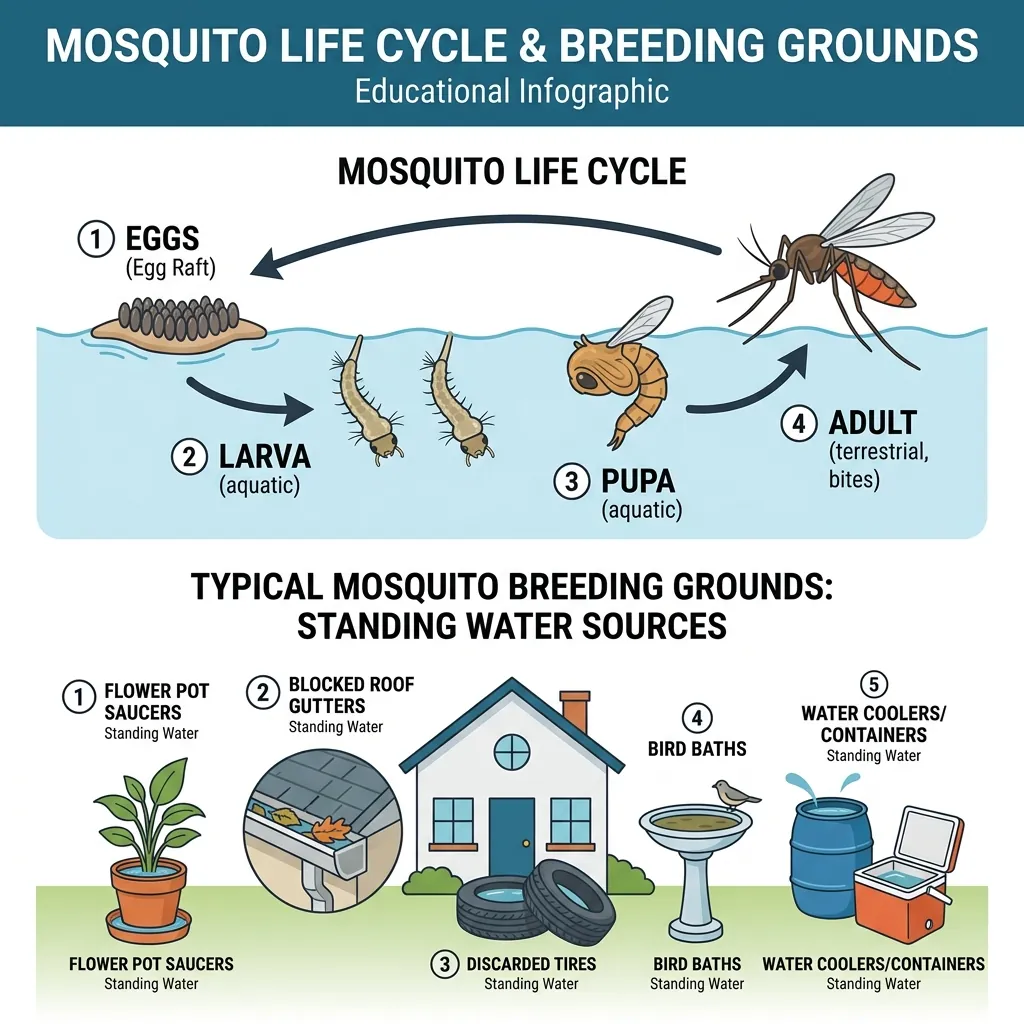
To control mosquitoes effectively, we must target them at every stage of their four-part lifecycle: egg, larva, pupa, and adult.
The three main types of mosquitoes responsible for disease transmission in urban India are:
- Aedes Mosquitoes: Vectors for Dengue, Chikungunya, and Zika. They are distinctively marked with black and white stripes (often called "tiger mosquitoes"). They are day-biters and breed in clean, stagnant water inside flower pots, water coolers, and discarded containers.
- Anopheles Mosquitoes: The primary vectors for Malaria. They bite from dusk to dawn and breed in clean water collections, slow-moving streams, and rainwater pools.
- Culex Mosquitoes: Vectors for Japanese Encephalitis and Filariasis. They breed in dirty, organic-rich stagnant water, such as open sewage drains and puddles, and are active during the night.
!Understanding Mosquito Life Cycles and Breeding Grounds
Early Signs of a Mosquito Infestation
An increase in mosquito activity is often easily recognized, but identifying active breeding spots is essential for eradication. Keep an eye out for these warning signs:
- Swarms of Flying Insects: Observing clusters of adult mosquitoes flying around shaded corners, under porch roofs, or in dense garden foliage.
- Larvae in Stagnant Water (Wrglers): Finding tiny, worm-like larvae swimming with a jerking motion near the surface of standing water in outdoor drains, plant trays, bird baths, or cooling units.
- High Frequency of Bites: Waking up with multiple itchy, swollen bumps on exposed skin areas, especially during seasonal transitions (pre-monsoon and post-monsoon).
- Buzzing Sounds: Hearing a high-pitched buzzing sound near your ears, particularly when sitting in shaded indoor areas or during evening hours.
Health Risks: The True Threat of Mosquitoes
The primary hazard of mosquito infestations is disease transmission. In Delhi NCR, seasonal outbreaks of vector-borne illnesses put immense pressure on families and hospitals:
1. Dengue Fever
Characterized by high fever, severe headache, joint and muscle pain (often called "breakbone fever"), and a drop in blood platelet count. Severe cases can progress to Dengue Hemorrhagic Fever, which is life-threatening.
2. Malaria
An infectious disease caused by plasmodium parasites transmitted by Anopheles mosquitoes. Symptoms include cyclical high fevers, shaking chills, and flu-like illness.
3. Chikungunya
Causes high fever and severe, debilitating joint pain that can persist for months or even years, affecting physical mobility.
Why DIY Mosquito Treatments Often Fail
Many homeowners use store-bought coils, vaporizers, bat rackets, and chemical sprays to manage mosquitoes. While these tools offer temporary relief, they rarely solve the root problem:
1. Vaporizers and Coils Only Repel Adult Insects
Electric plug-in vaporizers and burning coils only repel mosquitoes within a small radius. They do not address breeding sites. Once turned off, mosquitoes return immediately.
2. Insect Resistance to Household Sprays
Frequent use of off-the-shelf aerosol sprays has led to regional mosquito populations developing high resistance to standard pyrethroid chemicals.
3. Larval Breeding Sites Are Overlooked
Over 90% of a mosquito population exists as eggs, larvae, and pupae in standing water. Unless these breeding grounds are identified and treated with larvicides, new adult mosquitoes will hatch daily.
4. Outdoor Areas Remain Unprotected
Indoor vaporizers do nothing to protect gardens, balconies, or driveways, leaving you vulnerable to bites when spending time outdoors.
The TrustXcare Professional Mosquito Control Protocol
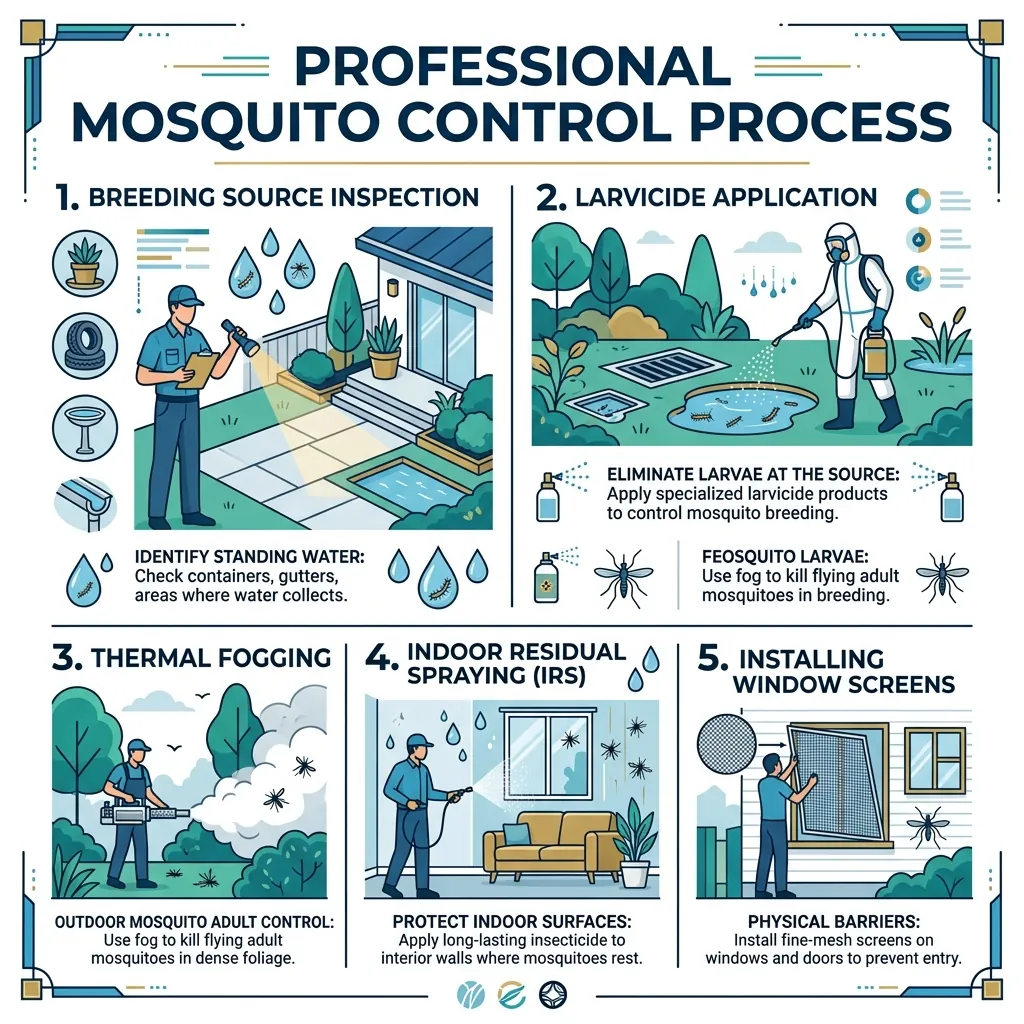
At TrustXcare, we implement an Integrated Mosquito Management (IMM) strategy. We target mosquitoes at both the larval stage (to stop breeding) and the adult stage (to reduce immediate bite activity).
!Professional Mosquito Control Process
Step 1: Detailed Breeding Site Inspection
Our technicians inspect your entire property, focusing on areas where standing water accumulates—including garden pots, air coolers, terrace drains, structural shafts, and basement sumps.
Step 2: Larvicide Treatment (Anti-Larval Program)
We apply eco-safe larvicide granules or biological agents (like Bacillus thuringiensis israelensis) to all stagnant water bodies that cannot be drained. This stops mosquito larvae from developing into biting adults.
Step 3: Outdoor Thermal & Cold Fogging
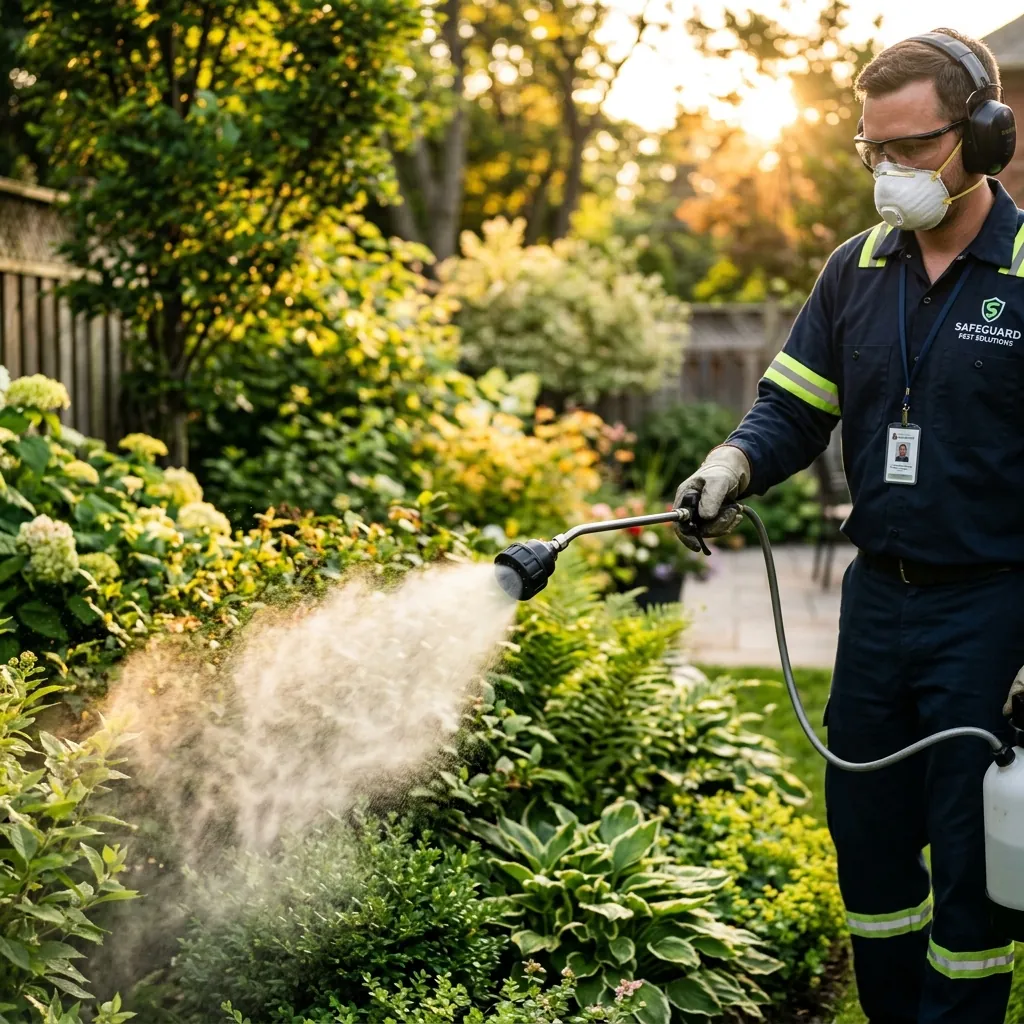
We perform thermal fogging and ULV (Ultra-Low Volume) cold misting in outdoor green zones, driveways, and common areas. This knocks down adult mosquitoes resting in bushes and trees.
Step 4: Indoor Residual Spray (IRS)
We apply low-odor, public-health residual insecticides to indoor walls, curtains, and behind furniture. Mosquitoes rest on these surfaces and are eliminated when they come in contact with the treated areas.
Step 5: Physical Exclusion Advisory
We evaluate window screens and door seals, providing recommendations on physical barriers to prevent mosquitoes from entering your home.
Larviciding vs. Outdoor Fogging
Understanding the differences between larval treatments and adult fogging helps you choose the right approach for your property:
| Feature | Larviciding (Anti-Larval) | Outdoor Fogging (Adulticidal) |
|---|---|---|
| Target Stage | Eggs, Larvae, and Pupae (Aquatic) | Adult Flying Mosquitoes (Terrestrial) |
| Location | Standing water bodies, drains, sumps | Gardens, driveways, bushes, common areas |
| Effectiveness Duration | Long-lasting (weeks of protection) | Temporary (immediate knockdown of active adults) |
| Application Mode | Granules, tablets, or liquid drops | Thermal smoke or ULV fine mist |
| Eco-Friendliness | Highly targeted; safe for fish and frogs | Requires careful application around flowering plants |
| Key Benefit | Stops the next generation of pests | Provides immediate relief for outdoor events |
Estimated Mosquito Control Charges in Delhi NCR (2026)
Mosquito control pricing varies based on plot size, garden area density, and whether you choose a single service or an AMC (Annual Maintenance Contract) during peak breeding seasons:
| Property Size / Type | Single Mist + Larvicide Treatment | Monthly AMC Package (Recommended for Monsoons) |
|---|---|---|
| 2 BHK / 3 BHK Apartment | ₹1,499 - ₹1,999 | ₹999 - ₹1,499 / Month |
| 4 BHK / Duplex Penthouse | ₹1,999 - ₹2,799 | ₹1,499 - ₹1,999 / Month |
| Independent Villa (with lawn) | ₹2,999 - ₹4,499 | ₹2,499 - ₹3,499 / Month |
| Commercial Complex / Society Office | ₹4,999 - ₹7,999 | Request customized commercial quote |
Note: Annual contracts include regular inspection and larvicide replenishment visits every 14 to 21 days during the high-risk Dengue season. Contact TrustXcare for a detailed quote.
Household Prevention Tips: How to Stop Breeding
You can significantly reduce mosquito breeding around your home by taking these practical preventive measures:
- 1Drain Standing Water: Empty, clean, and dry all water-holding containers weekly, including flower pot trays, pet water bowls, and vases.
- 1Maintain Air Coolers: Drain and clean your desert coolers weekly. Add a few drops of anti-larval oil or household disinfectant if water cannot be fully drained.
- 1Clear Roof Gutters: Keep roof gutters and balcony drains clean to prevent rainwater from pooling.
- 1Install Window Meshes: Install fine-mesh screens on all windows and doors to allow ventilation while keeping mosquitoes out.
- 1Trim Garden Foliage: Keep your lawn grass mowed short and trim dense bushes to reduce shaded resting areas for adult mosquitoes.
- 1Cover Stagnant Water: Keep overhead water tanks, septic tanks, and rain barrels tightly sealed with fitted lids.
Common Myths vs. Facts About Mosquitoes
Let's clarify some common misconceptions about mosquitoes:
- Myth: Mosquitoes only breed in dirty, muddy water.
Fact: Aedes mosquitoes, which transmit Dengue, breed exclusively in clean, stagnant water, such as water collected in clean plastic trays, pots, and coolers.
- Myth: Fogging is the only effective way to control mosquitoes.
Fact: Fogging only kills active adult mosquitoes. It does not destroy eggs or larvae. Long-term control requires larviciding and eliminating standing water.
- Myth: Eating garlic or taking vitamin B keeps mosquitoes away.
Fact: Dietary changes do not repel mosquitoes. The most effective personal protection remains EPA-approved repellents containing DEET, Picaridin, or Oil of Lemon Eucalyptus.
- Myth: Mosquitoes do not bite in cold winter months.
Fact: While activity decreases, mosquitoes can seek shelter inside warm homes and continue to breed in indoor plumbing and septic pipes.
Case Study: Dengue Prevention at a Gurgaon Residential Society
The Problem: A large residential society in Sector 56, Gurgaon, reported an increase in Dengue cases among residents during the post-monsoon season. Several children had been hospitalized, causing concern within the community. The society management had been performing local diesel-mixed fogging, but the treatments had no lasting effect, and mosquitoes returned within hours.
The Solution: TrustXcare conducted a comprehensive inspection of the society's common areas. We discovered heavy mosquito breeding in open basement stormwater drains, elevator shaft sumps, and landscaping saucers. We implemented an Integrated Mosquito Management (IMM) campaign. We treated all stagnant water sites with biological larvicide granules to destroy larvae on contact. We followed this with residual wall sprays on basement walls and ULV misting in the garden and playground zones.
The Result: Society-wide mosquito breeding was stopped. The resident-reported Dengue cases dropped to zero within 10 days, and our regular monitoring has kept the community safe throughout the season.
Frequently Asked Questions (20+)
1. Are the chemicals used for indoor mosquito spraying safe for children?
Yes. TrustXcare uses public-health insecticides approved by the Central Insecticides Board (CIB). These chemicals have low toxicity for humans and pets and are applied to wall surfaces and behind furniture where contact is minimal.
2. How long do I need to stay out of the house after treatment?
We recommend leaving the house for about 1 to 2 hours during and after the spray to allow the chemical mist to settle and dry completely.
3. How often should ULV misting or fogging be done in my garden?
During peak breeding season (monsoons and high-humidity months), we recommend outdoor misting or ULV fogging once every 10 to 14 days.
4. What is ULV misting, and how is it different from thermal fogging?
Thermal fogging uses heat to create a thick white smoke that carries the insecticide. ULV (Ultra-Low Volume) misting produces a cold, fine mist of micro-droplets. ULV misting is virtually odorless, leaves no smoke residue, and is safer for residential areas.
5. Why are mosquitoes attracted to me more than others?
Mosquitoes are attracted to carbon dioxide, body heat, lactic acid, and certain skin bacteria. People who exercise, have higher body temperatures, or are pregnant naturally attract more mosquitoes.
6. Can mosquitoes breed in swimming pools?
Well-maintained swimming pools with functional chlorine and filtration systems do not support mosquito breeding. However, neglected, unchlorinated pools can become active breeding grounds.
7. Do mosquitoes breed in indoor septic tanks?
Yes. Culex mosquitoes can breed in septic tanks and open drainage systems. We treat these areas with specialized larvicide blocks.
8. What is the active life span of an adult mosquito?
Adult female mosquitoes live for about 2 to 4 weeks depending on temperature and humidity, while male mosquitoes live for only a week.
9. Why does only the female mosquito bite?
Female mosquitoes need the protein and iron found in blood to develop their eggs. Male mosquitoes feed only on flower nectar and do not bite.
10. Does municipal fogging in Noida protect my home?
Municipal fogging provides temporary knockdown of adult mosquitoes on public roads. It does not reach the private gardens, balconies, or indoor areas where mosquitoes nest.
11. Can mosquitoes transmit COVID-19 or other blood diseases?
No. Mosquitoes cannot transmit COVID-19 or HIV. The viruses are digested inside the mosquito's gut rather than being passed to the next host.
12. Does keeping windows open during afternoon hours let mosquitoes in?
Aedes mosquitoes (dengue vectors) are active day-biters and are most active in early mornings and late afternoons. Keep windows without mesh screens closed during these times.
13. What is the best mosquito repellent ingredient?
Look for products containing EPA-registered active ingredients like DEET (20% to 30%), Picaridin, or Oil of Lemon Eucalyptus (OLE).
14. What are the best indoor plants to repel mosquitoes?
Plants like lavender, marigolds, citronella grass, and rosemary release scents that deter mosquitoes, though they do not replace professional treatments for active infestations.
15. Can mosquitoes survive in air-conditioned rooms?
Air conditioning lowers room temperature and humidity, which makes mosquitoes sluggish and less likely to bite, but it does not eliminate them.
16. How does TrustXcare target hidden mosquito larvae?
We inspect all potential standing water sources and apply targeted larvicide granules that dissolve and destroy larvae without harming other local wildlife.
17. How long does the residual wall spray remain effective?
Our indoor residual sprays provide protective barriers on walls that remain active for 4 to 6 weeks, provided the walls are not painted or washed.
18. Does TrustXcare offer a warranty for mosquito control?
Due to the highly mobile nature of adult flying insects, we do not offer absolute elimination guarantees for single treatments. However, we guarantee breeding prevention inside your property boundaries under our AMC package.
19. Do you use diesel in your ULV misting machines?
No. We use water-based formulations for residential ULV misting to avoid the smelly, oily soot and fire hazards associated with traditional diesel-mixed fogging.
20. Do you serve all sectors of Noida and Gurgaon?
Yes. TrustXcare provides mosquito control, larviciding, and fogging services across all sectors and residential colonies in Delhi, Noida, Gurgaon, Ghaziabad, and Faridabad.
Conclusion: Book a Free Inspection with TrustXcare Today
A mosquito problem is a significant health risk. The longer breeding sites remain untreated, the higher the risk of Dengue, Malaria, or Chikungunya affecting your family.
Reclaim your peace of mind and protect your home. TrustXcare is Delhi NCR's premier ISO-certified pest management agency, combining anti-larval treatments, certified technicians, and ULV misting.
Contact TrustXcare today to book a comprehensive site inspection and get a customized mosquito prevention plan.