

The Spider Control Complete Guide: How to Eradicate House Spiders
Spiders are among the most common and feared household pests. While most spiders found in homes are harmless and actually help control other insect populations, finding cobwebs in ceiling corners, dusty basements, and behind furniture can make a home feel neglected, dirty, and unsettling.
For residents and landlords in Delhi NCR—spanning Delhi, Gurgaon, Noida, Greater Noida, Ghaziabad, and Faridabad—spiders are a persistent presence. High humidity, seasonal shifts, and the presence of other household insects (like flies, mosquitoes, and ants) create an abundant food supply that attracts spiders indoors.
This guide provides a comprehensive manual on spider control. We cover spider biology, nesting habits, professional treatment methods (such as web removal, residual insecticide barriers, and exclusion), DIY limitations, and safety checklists to keep your home cobweb-free.
Understanding Spider Life Cycles and Nesting Habitats
Spiders belong to the class Arachnida and are characterized by having eight legs, two body segments, and no wings or antennae. Unlike insects, spiders are predators that feed primarily on other bugs.
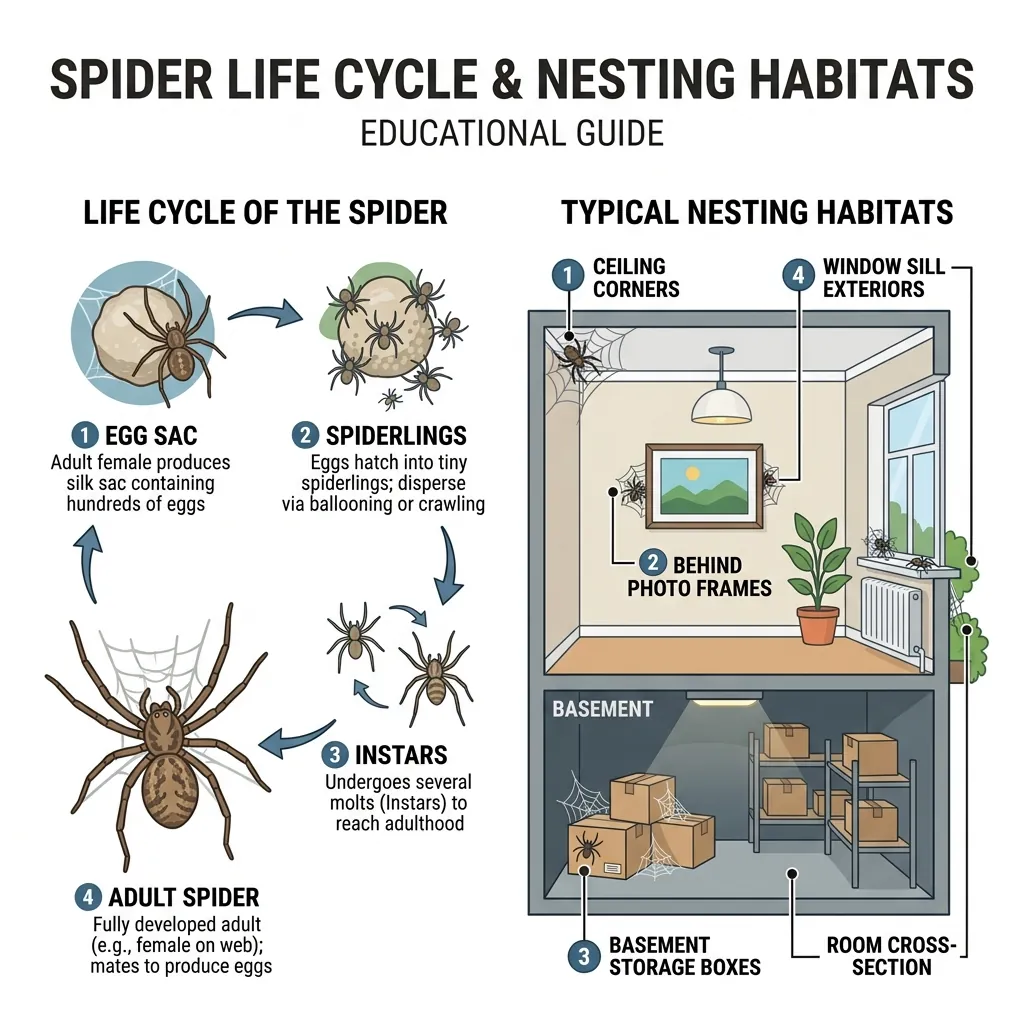
To manage spiders effectively, it is important to understand their lifecycle and habitat preferences:
- The Egg Sac: A female spider lays eggs inside a silk egg sac, which can contain anywhere from 50 to hundreds of eggs depending on the species. She hides this sac in dark, sheltered crevices or carries it with her.
- Spiderling Dispersal: Once eggs hatch, tiny spiderlings emerge. Many species disperse through "ballooning," where they release silk threads into the air currents to travel to new locations, often entering homes through open windows or vents.
- Nesting Types (Web-builders vs. Hunters): Web-building spiders (like Cellar Spiders or Cobweb Spiders) spin webs in quiet, dark areas to trap prey. Hunting spiders (like Wolf Spiders or Huntsman Spiders) do not spin webs to catch food; they crawl actively along floors and walls to hunt down insects.
!Understanding Spider Life Cycles and Nesting Habitats
Early Signs of a Spider Infestation
Identifying spider activity early helps prevent large populations from establishing nests inside your home. Look for these key signs:
- Cobwebs and Webs: Finding active or abandoned webs in ceiling corners, along window frames, behind bookcases, or around outdoor light fixtures.
- Egg Sacs: Spotting small, silken, ball-like egg sacs tucked away in dark, undisturbed areas like closets, drawers, or basement boxes.
- Sighting Crawling Spiders: Regularly seeing spiders crawling across walls, floors, or curtain folds, especially during the evening hours.
- Frequent Sightings of Prey Insects: An abundance of other pests, such as ants, flies, or moths, provides a food source that encourages spiders to settle indoors.
Hazards and Risks: The Impact of Spiders
While spiders rarely cause direct property damage, their presence presents several physical, emotional, and aesthetic issues:
1. Arachnophobia and Mental Stress
The fear of spiders (arachnophobia) is one of the most common phobias. Living in a home with visible spiders or sticky cobwebs causes constant anxiety, discomfort, and sleep disturbance for family members.
2. Painful Bites
While most house spiders in India are not venomous to humans, some species (like Wolf Spiders) can bite if trapped against skin or disturbed. These bites can cause localized pain, redness, swelling, and minor allergic reactions.
3. Dust Accumulation and Poor Aesthetics
Spider webs collect dust, pollen, and debris, creating dirty cobwebs that ruin the appearance of clean walls and high ceilings, making homes look unmaintained.
Why DIY Spider Treatments Often Fail
Many homeowners rely on household broomsticks, aerosol sprays, and chemical repellers to manage spiders. These DIY efforts usually fail due to several factors:
1. Brooming Webs Does Not Kill the Pests
Simply sweeping away webs with a broom removes the web but leaves the spider alive. The spider will quickly move to a nearby corner and spin a new web within hours.
2. Spiders Do Not Groom Themselves Like Insects
Most crawling insect sprays rely on pests walking over a treated surface and grooming their legs to ingest the chemical. Spiders have long legs that keep their bodies high off the ground, and they do not groom in the same way, making standard residual sprays less effective against them.
3. Hiding in Hard-to-Reach Places
Spiders nest in high ceiling corners, dark attics, and deep wall voids that standard retail sprays cannot reach.
The TrustXcare Professional Spider Control Protocol
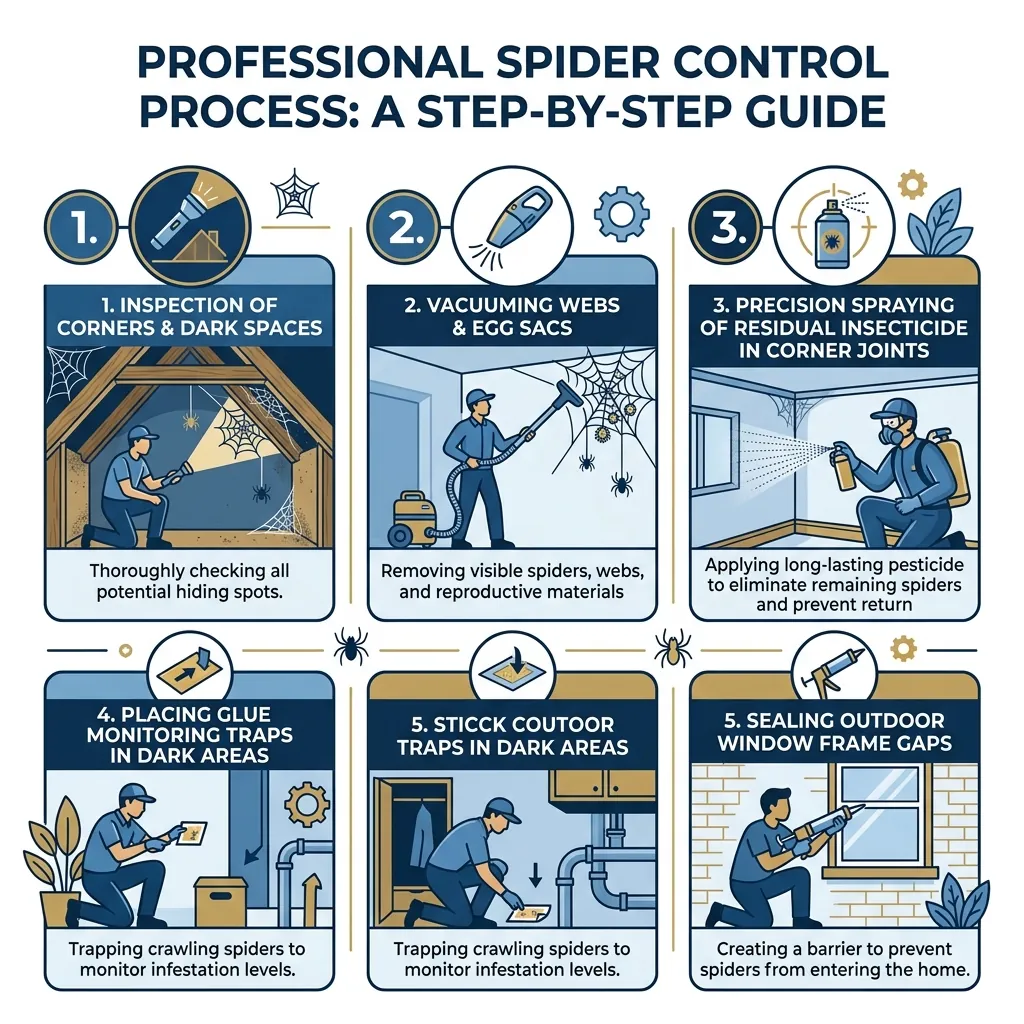
At TrustXcare, we implement an Integrated Pest Management (IPM) approach. We combine physical web clearing, vacuuming of reproductive materials, and target-specific residual chemical treatments to eliminate spiders and prevent their return.
!Professional Spider Control Process
Step 1: Complete Home Inspection
Our technicians perform a thorough survey of your property, checking high ceilings, dark corners, behind furniture, window frame joints, crawl spaces, and outdoor light fixtures.
Step 2: Mechanical Web & Egg Sac Removal
We use specialized, long-reach extendable brushes and industrial vacuums to clear away all active webs, cobwebs, and hidden egg sacs. Removing the egg sacs is crucial to stopping the next generation of spiders.
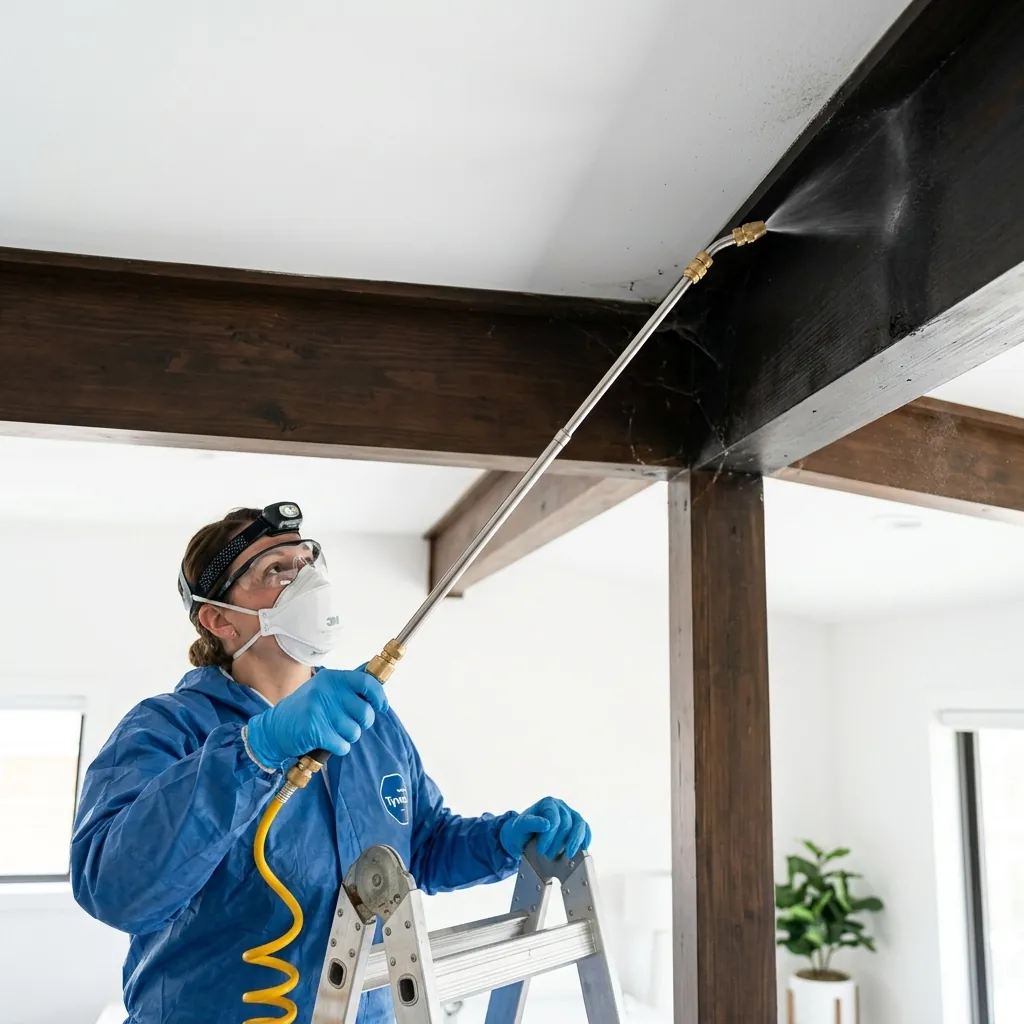
Step 3: Targeted Residual Spray Barrier
We apply specialized micro-encapsulated residual insecticides along baseboards, ceiling junctions, window sills, and dark corners. These chemicals stick to the spider's feet when they crawl over treated surfaces, eliminating them.
Step 4: Insect Source Control
Spiders stay where food is abundant. We treat your property for other crawling and flying insects to eliminate the spiders' food source.
Step 5: Exclusion and Advice
We identify cracks in exterior walls, gaps under doors, and open vents, recommending sealing methods to block outdoor spiders from crawling inside.
Web Vacuuming vs. Chemical Residual Spraying
Understanding the differences between mechanical cleaning and chemical barriers helps you choose the right approach for your home:
| Feature | Mechanical Web & Sac Vacuuming | Chemical Residual Barrier Spray |
|---|---|---|
| Mechanism | Physically removes webs, spiders, and egg sacs | Insecticide barrier kills crawling spiders over time |
| Target | Immediate removal of webs and eggs | Long-term control of hidden and crawling spiders |
| Reach | Visible ceiling corners, under-furniture, vents | Baseboards, door frames, window sills, wall cracks |
| Chemical Use | 100% pesticide-free and eco-safe | Uses targeted, low-toxicity public-health chemicals |
| Durability | Instant aesthetic improvement | Remains active for 4 to 6 weeks |
| Key Benefit | Stops immediate reproduction by removing egg sacs | Prevents outdoor crawling spiders from entering |
Estimated Spider Control Charges in Delhi NCR (2026)
Spider control costs depend on ceiling height, property size, and the extent of web clearing required. Below is an estimated price range for professional residential services:
| Property Size | Standard Web Clearing + Spray (Single Service) | Premium Deep Clearing + Dual-Spray (With 3-Month Warranty) |
|---|---|---|
| 1 BHK / Apartment | ₹1,199 - ₹1,499 | ₹1,999 - ₹2,499 |
| 2 BHK / Apartment | ₹1,499 - ₹1,999 | ₹2,499 - ₹3,499 |
| 3 BHK / Apartment | ₹1,999 - ₹2,799 | ₹3,499 - ₹4,499 |
| 4 BHK / Duplex | ₹2,799 - ₹3,999 | ₹4,499 - ₹5,999 |
| Independent Villa | ₹3,999 - ₹5,499 | ₹5,999 - ₹8,999 |
Note: High ceilings (above 12 feet) or duplex stairwells requiring specialized scaffolding or ladders may incur minor extra charges. Contact TrustXcare for a detailed quote.
Preventive Maintenance: How to Keep Spiders Away
You can keep spiders from nesting in your home by taking these practical preventive steps:
- 1Clear Clutter: Keep closets, attics, and storage areas organized. Avoid storing cardboard boxes directly on the floor; use airtight plastic bins instead.
- 1De-web Regularly: Use a microfiber duster or vacuum to sweep away new webs as soon as you see them, preventing spiders from settling.
- 1Manage Outdoor Lights: Yellow insect-resistant bulbs attract fewer insects, which helps reduce the spiders' food supply near your doors.
- 1Seal Entry Gaps: Apply caulk to cracks around window frames, install door sweeps on exterior doors, and seal gaps around utility pipes.
- 1Control Other Pests: Schedule regular pest control treatments to eliminate ants, flies, and silverfish, removing the spiders' food sources.
Common Myths vs. Facts About Spiders
Let's clarify some common misconceptions about house spiders:
- Myth: All house spiders are highly venomous.
Fact: Almost all house spiders found in Delhi NCR are harmless to humans. While they possess venom to subdue insects, their jaws are too small or weak to pierce human skin, or their venom is too weak to cause harm.
- Myth: Spiders enter homes through plumbing drains.
Fact: Modern plumbing traps prevent spiders from crawling up drains. Spiders found in sinks or tubs usually crawl in from rooms looking for water and get trapped by the smooth porcelain walls.
- Myth: Spiders are insects.
Fact: Spiders are arachnids. They have eight legs, two body segments, and no antennae or wings, whereas insects have six legs, three body segments, and antennae.
Case Study: Spider Clearing in a Gurgaon Penthouse
The Problem: The owner of a high-rise duplex penthouse in Sector 57, Gurgaon, noticed a heavy accumulation of dusty cobwebs along double-height ceilings (18 feet high) and around large glass windows. The height made DIY cleaning impossible, and the webs attracted flies and dust, ruining the luxury aesthetics of the living room.
The Solution: The TrustXcare team used specialized extendable high-reach vacuum wands to clear all spider webs and egg sacs from the double-height ceilings and window trims. We applied a micro-encapsulated residual spray along the ceiling corners, window frames, and balcony glass rails. We also treated the balcony garden area to reduce flying insects.
The Result: The high-ceiling areas were cleared of all cobwebs. The residual treatments prevented new webs from forming, restoring the penthouse's clean, modern appearance.
Frequently Asked Questions (20+)
1. Are the chemicals used for spider control safe for pets?
Yes. TrustXcare uses CIB-approved, low-toxicity residual insecticides. Once the spray dries completely (usually within 1 to 2 hours), the treated areas are safe for dogs, cats, and children.
2. Can you clear webs from double-height ceilings?
Yes. Our technicians carry specialized extension poles, vacuums, and safety ladders to safely clear webs from high ceilings up to 20 feet.
3. How long does the residual spider treatment remain active?
Our residual barrier treatments remain active for 4 to 6 weeks on indoor walls, ceiling joints, and baseboards.
4. What is arachnophobia?
Arachnophobia is the intense, irrational fear of spiders, which can cause significant anxiety and distress when spiders are present in living areas.
5. Why do spiders build webs near light bulbs?
Spiders spin webs near lights because light attracts flying insects like moths and flies, providing an abundant source of food.
6. Do Hunstman spiders bite?
Huntsman spiders are large and fast-moving, which can be scary. However, they are shy and rarely bite unless handled or squeezed, and their bite is not dangerous to humans.
7. How do spiders enter my apartment?
Spiders enter through cracks in window frames, gaps under doors, open balconies, and vents, or they are carried in on potted plants and moving boxes.
8. Can I use vinegar to repel spiders?
Vinegar can act as a natural contact spray due to its acidity, but it does not provide long-term residual protection or prevent spiders from returning.
9. Why does vacuuming help control spiders?
Vacuuming removes not only the spiders but also their sticky webs and egg sacs, which stops hundreds of baby spiders from hatching inside your home.
10. Do spiders damage plaster or drywall?
No. Spiders do not chew wood, plaster, or drywall. They only use existing cracks and corners to spin webs and nest.
11. What is the main food source for house spiders?
House spiders feed primarily on insects like flies, mosquitoes, ants, moths, and silverfish.
12. Are there venomous spiders in Delhi NCR?
There are no deadly spiders (like Black Widows or Brown Recluses) native to Delhi NCR. Local bites may cause minor itching, swelling, or localized irritation.
13. How many eyes does a spider have?
Most spider species have eight eyes arranged in different patterns, though some have six or fewer.
14. What are cobwebs?
Cobwebs are old, abandoned spider webs that have collected dust, pollen, and debris over time.
15. Do spiders live in air conditioning ducts?
Yes. AC vents and duct paths provide dark, undisturbed routes where spiders can travel and nest.
16. What is a Wolf spider?
Wolf spiders are large, hairy, ground-dwelling spiders that hunt prey actively instead of spinning webs. They are fast runners and nest in dark, low corners.
17. How can I differentiate between an insect and a spider?
Insects have six legs, three body sections, and antennae. Spiders have eight legs, two body sections, and no antennae.
18. Does TrustXcare offer a warranty on spider services?
Yes. We offer a 3-month warranty on our premium double-service spider control treatments.
19. Do you cover Noida and Greater Noida?
Yes. TrustXcare provides spider control and web clearing services across Noida, Greater Noida, Gurgaon, Delhi, Ghaziabad, and Faridabad.
20. Can I clean my walls immediately after spraying?
Do not wash or wipe treated ceiling junctions or baseboards for at least 7 days to preserve the residual insecticide barrier.
Conclusion: Book a Free Inspection with TrustXcare Today
A spider problem ruins the clean appearance of your home. The longer cobwebs are left to accumulate dust, the harder they are to clean, and nesting egg sacs can lead to hundreds of new spiders.
Reclaim your clean walls and peace of mind. TrustXcare is Delhi NCR's premier ISO-certified pest management agency, combining deep web vacuuming, certified technicians, and effective residual sprays.
Contact TrustXcare today to book a comprehensive site inspection and get a customized spider control plan.