

The Ultimate Bed Bug Removal Guide: How to Eradicate Bed Bugs for Good
Bed bugs are among the most stressful, persistent, and psychologically draining pests a homeowner, landlord, or hotelier can encounter. Unlike other pests that forage for garbage, bed bugs feed exclusively on human blood. They wait until you are asleep, crawl onto your skin, and bite, leaving behind rows of intensely itchy, red welts that disrupt sleep and cause immense anxiety.
For residents and hospitality business owners in Delhi NCR—spanning Delhi, Gurgaon, Noida, Greater Noida, Ghaziabad, and Faridabad—bed bugs are an increasingly common problem. High commuter density, frequent travel, and dense apartment housing allow these micro-sized pests to spread rapidly from one home or hotel room to another.
This guide provides a comprehensive manual on bed bug eradication. We cover bed bug biology, inspection methods, professional treatment options (such as high-temperature steam and target-specific residual chemical treatments), DIY limitations, and checklists to make sure they never return.
Understanding Bed Bugs: Castes, Biology, and Hiding Habits
Bed bugs (Cimex lectularius) are small, oval, flat, brownish insects that resemble apple seeds in shape and size. Because they do not have wings, they cannot fly or jump. However, they crawl rapidly and are masters of hitchhiking on luggage, clothing, backpack seams, and second-hand furniture.
To understand why bed bugs are so difficult to get rid of, you must understand their lifecycle and behavior:
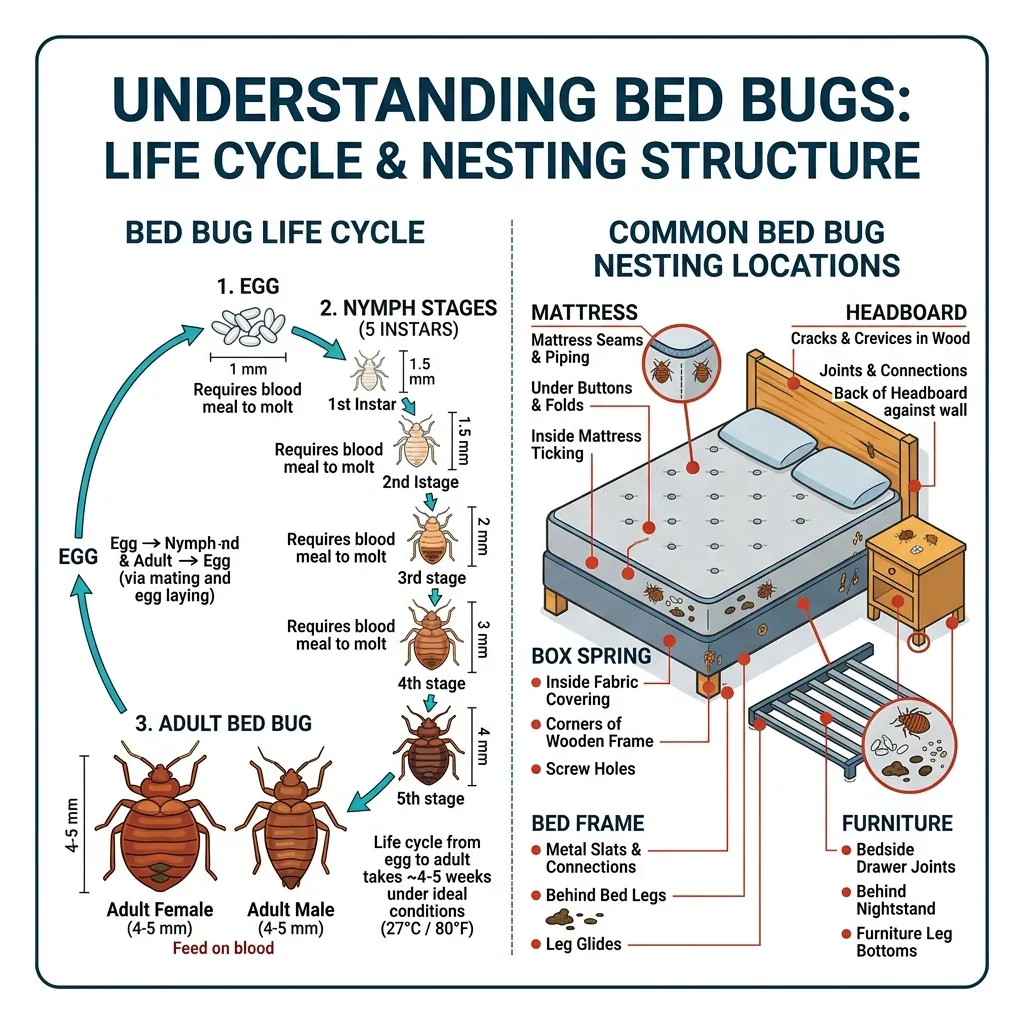
- The Blood Meal Requirement: Bed bugs must consume a blood meal to advance through each of their five nymph stages (instars) and to lay eggs. Under warm indoor conditions, they can go from egg to reproducing adult in just four to five weeks.
- Egg Laying Speed: A single female bed bug can lay 1 to 5 eggs per day, totaling up to 500 eggs in her lifetime. These eggs are tiny (about the size of a dust speck), white, and sticky, making them hard to spot and vacuum.
- Extreme Survival Capabilities: In cool conditions, adult bed bugs can survive for several months without feeding, waiting patiently inside vacant apartments or unused furniture for a new host to arrive.
!Understanding Bed Bugs: Life Cycle & Nesting Structure
Early Signs of a Bed Bug Infestation
Bed bugs are nocturnal and hide in narrow crevices during the day. Often, residents do not realize they have bed bugs until the infestation is well established. Inspect your bed and bedroom regularly for these warning signs:
- Intensely Itchy Bites: Bed bug bites typically appear in lines or clusters of three or four, often referred to as "breakfast, lunch, and dinner" patterns, on exposed areas of skin like arms, shoulders, neck, and legs.
- Blood Stains on Bedding: Finding small, unexplained smears of fresh blood on your pillows, sheets, or mattress cover is a common sign of accidentally crushing engorged bed bugs while sleeping.
- Fecal Spots (Dark Spots): Bed bugs leave tiny, dark-brown or black drops of digested blood on sheets, mattress seams, bed frames, and baseboard junctions. These spots look like small marker dots and smear if wiped with a damp cloth.
- Shed Skins and Egg Shells: As nymphs grow, they shed their light-brown outer skins. Finding these paper-thin, translucent insect casings around your headboard, mattress tufts, or electrical outlets indicates active breeding.
- A Sweet, Musty Odor: A large, active bed bug population produces a sweet, musty odor—often compared to rotten coriander or damp cardboard—released from their scent glands.
Health Risks: The True Cost of Bed Bugs
While bed bugs are not known to transmit infectious diseases to humans, their presence poses significant physical and mental health risks:
1. Severe Sleep Deprivation
The fear of being bitten while sleeping causes chronic insomnia, restlessness, and nighttime anxiety. Lack of sleep impairs daily productivity, weakens the immune system, and increases stress levels.
2. Secondary Skin Infections
Bed bug bites can be intensely itchy. Excessive scratching can break the skin, introducing bacteria and leading to secondary skin infections like impetigo, ecthyma, or cellulitis.
3. Allergic Reactions
Some individuals have strong allergic reactions to the saliva injected by bed bugs while feeding, resulting in swollen, painful welts that require medical treatment.
4. Psychological Distress
Living with a bed bug infestation is mentally exhausting. Many residents experience social isolation, paranoia, and embarrassment, avoiding inviting guests to their homes.
Why DIY Bed Bug Treatments Fail
Many homeowners spend thousands of rupees on store-bought aerosol sprays, bug bombs, powders, and home remedies (like sun-drying mattresses) to eradicate bed bugs. These DIY efforts usually fail for several reasons:
1. Bug Bombs and Aerosols Spread the Infestation
Consumer aerosol sprays only kill the bed bugs they hit directly. Off-the-shelf foggers (bug bombs) do not penetrate mattress seams or deep wall cracks. Instead, the chemical vapors irritate the bed bugs, causing them to scatter deeper into walls, electrical conduits, and adjacent rooms, making the infestation harder to treat.
2. High Resistance to Standard Pyrethroids
Over the years, bed bugs have developed genetic resistance to many common chemicals used in standard consumer insecticide sprays. Standard sprays often fail to affect them.
3. Difficulty Reaching Eggs
Most consumer sprays do not kill bed bug eggs. Even if you kill the active adults, the eggs hatch within 7 to 10 days, restarting the infestation cycle.
4. Ineffective Heat Application
While heat kills bed bugs, simply placing a mattress in the sun is rarely effective in Delhi NCR because the core of the mattress does not reach the required temperature (above 50°C) to kill all bugs and eggs nested inside.
The TrustXcare Professional Bed Bug Eradication Protocol
At TrustXcare, we implement a multi-stage Integrated Pest Management (IPM) methodology. We combine advanced thermal steam technology with targeted chemical treatments to eliminate all life stages—including eggs—safely and permanently.
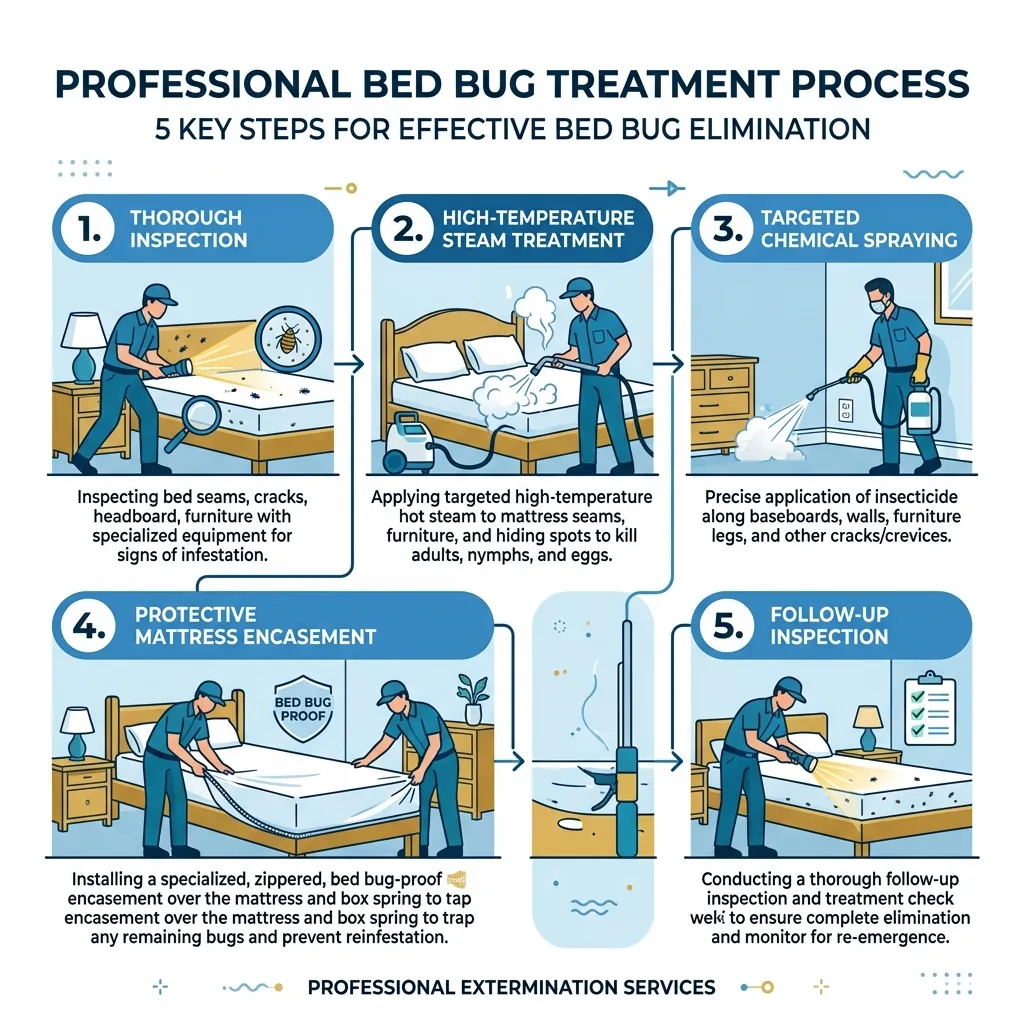
!Professional Bed Bug Treatment Process
Step 1: Detailed Bedroom Inspection
Our certified technicians perform a thorough inspection using flashlights and magnifying tools. We inspect mattress piping, bed frame joints, headboard backings, bedside drawers, baseboard cracks, and electrical outlets to locate all harborages.
Step 2: High-Temperature dry Steam Treatment
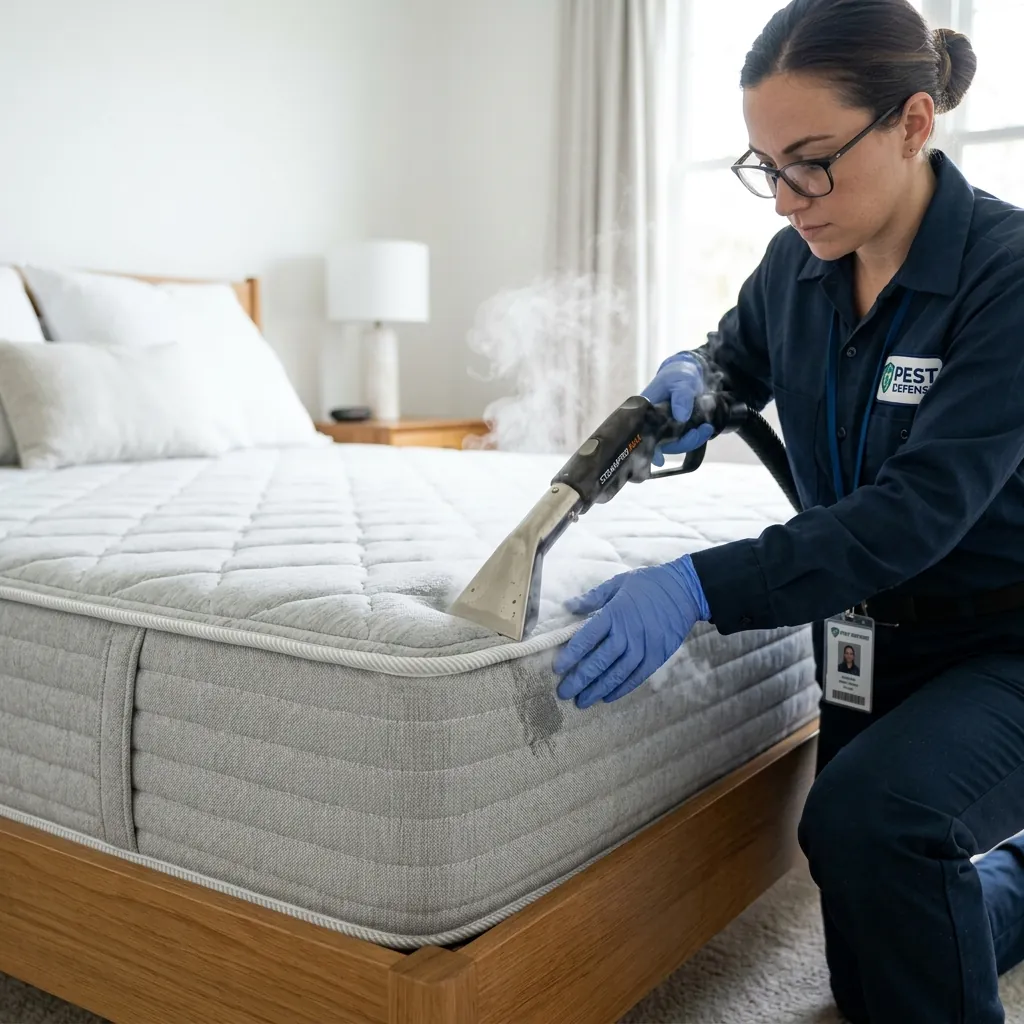
We apply dry steam heated to over 120°C directly to mattress seams, headboards, and furniture crevices. This high heat instantly kills bed bugs and their eggs on contact, without soaking your bed.
Step 3: Targeted Chemical Application
We apply premium, public-health residual insecticides along baseboards, door frames, and bed corners. We use non-repellent formulations that bed bugs cannot detect, ensuring they pick up the active ingredient when they crawl out of hiding.
Step 4: Mattress & Box Spring Encase-ment
For added protection, we recommend wrapping your mattress and box spring in zippered, bed-bug-proof encasements. This traps any remaining bed bugs inside, where they eventually die, and prevents new bugs from nesting in the mattress.
Step 5: Scheduled Follow-Up Treatment
Bed bug eggs are highly resilient. To ensure complete eradication, we perform a mandatory follow-up service 10 to 14 days after the first treatment. This eliminates any newly hatched nymphs before they mature and lay eggs.
Chemical Spray vs. Steam Heat Treatment
Understanding the differences between these two primary professional bed bug treatments helps you choose the right approach for your home:
| Feature | Chemical Spray Treatment | Steam Heat Treatment |
|---|---|---|
| Mechanism | Insecticide residues kill bugs over time | High-temperature steam kills bugs & eggs on contact |
| Eradication of Eggs | Limited; requires follow-up treatment | Highly effective; kills eggs instantly |
| Drying Time | Requires 2 to 3 hours to dry | Dries quickly within minutes |
| Eco-Friendliness | Uses targeted chemicals | 100% eco-friendly and non-toxic |
| Disruption | Minor; requires vacating rooms during application | Minimal; safe to occupy immediately |
| Application Zone | Baseboards, door frames, cracks, and outlets | Mattress seams, headboards, curtains, and sofas |
Estimated Bed Bug Control Charges in Delhi NCR (2026)
Bed bug control costs vary depending on the number of bedrooms, infestation severity, and treatment methods. Below is an estimated price range for professional residential services:
| Property Size | Standard Spray Treatment (Single Service) | Premium Steam + Spray (Double Service with Warranty) |
|---|---|---|
| 1 BHK / Apartment | ₹1,499 - ₹1,999 | ₹2,499 - ₹3,499 |
| 2 BHK / Apartment | ₹1,999 - ₹2,799 | ₹3,499 - ₹4,499 |
| 3 BHK / Apartment | ₹2,499 - ₹3,499 | ₹4,499 - ₹5,999 |
| 4 BHK / Duplex | ₹3,499 - ₹4,999 | ₹5,999 - ₹7,999 |
| Independent Villa | ₹4,999 - ₹6,999 | ₹7,999 - ₹11,999 |
Note: These are estimated market rates. Exact quotes depend on the level of damage and specific structural factors. Contact TrustXcare for a free, customized site inspection and quote.
Step-by-Step Preparation Guide Before Treatment
To ensure a successful professional bed bug treatment, proper preparation of your home is essential. Follow these steps before our technicians arrive:
- 1Strip All Beds: Remove all bed sheets, blankets, pillowcases, and mattress covers. Bag them inside plastic bags in the bedroom to prevent spreading bugs to other rooms.
- 1Wash on High Heat: Wash all bedding, curtains, and clothing in hot water (at least 60°C) and dry them on high heat for 30 minutes to kill all bed bugs and eggs.
- 1Clear the Floors: Remove all clutter from bedroom floors, under beds, and closets. This gives technicians clear access to baseboards and corners.
- 1Empty Wardrobes & Drawers: If bed bugs are found inside cupboards or dressers, empty them completely and bag the contents for washing.
- 1Vacuum Thoroughly: Vacuum the entire room, focusing on mattress seams, carpet edges, and bed frames. Dispose of the vacuum bag immediately in an outdoor garbage bin.
- 1Move Furniture: Move beds and nightstands at least 6 inches away from walls to allow technicians to apply treatments to baseboards and the backs of headboards.
Common Myths vs. Facts About Bed Bugs
Let's clarify some common misconceptions about bed bugs:
- Myth: Bed bugs only infest dirty homes.
Fact: Bed bugs are not attracted to dirt or waste; they are attracted to human warmth and carbon dioxide. They can infest five-star hotels and clean homes alike.
- Myth: Bed bugs are too small to see with the naked eye.
Fact: While bed bug eggs and young nymphs are very small, adult bed bugs are about 4 to 5 mm long and easily visible to the naked eye.
- Myth: Bed bugs only live in beds.
Fact: While they prefer mattresses and bed frames, they also nest behind wallpapers, inside electrical outlets, in sofa cushions, and along baseboards.
- Myth: You must throw away your mattress if you get bed bugs.
Fact: Most mattresses can be saved using professional steam treatments, targeted chemical applications, and bed-bug-proof encasements.
Case Study: Bed Bug Eradication in a Gurgaon PG Hostel
The Problem: The manager of a premium PG hostel in Sector 45, Gurgaon, noticed a sudden drop in occupancy after students complained of painful skin bites. Several students had moved out, and bad reviews online threatened the PG's reputation. The manager had tried DIY aerosol sprays, but the bed bugs returned, spreading to adjacent rooms through shared electrical conduits.
The Solution: The TrustXcare team conducted a comprehensive inspection. We discovered heavy bed bug harborages in the wooden bed frames, mattress seams, and electrical outlet covers in three adjoining rooms. We implemented a double-service Steam-Chemical IPM program. We treated all mattresses and bed frames with dry steam (120°C) to kill bugs and eggs instantly. We followed this with a targeted residual spray application along baseboards, furniture joints, and wall cracks, and sealed the electrical conduit entry points. A matching follow-up service was conducted 12 days later.
The Result: The bed bug population was completely eliminated. The hostel manager successfully resumed operations with a 100% bed-bug-free guarantee, protecting their students' health and restoring the business's reputation.
Frequently Asked Questions (20+)
1. Is professional bed bug treatment safe for my family and pets?
Yes. TrustXcare uses government-approved, low-toxicity chemicals. We apply liquid sprays to cracks and crevices where children and pets cannot easily reach. We advise vacating the treated rooms during spraying and until they are dry (about 2 to 3 hours).
2. Do I need to throw away my pillows and mattress?
No. In most cases, mattresses and pillows do not need to be discarded. Our high-temperature steam treatments and protective encasements allow you to keep your bedding safely.
3. How do bed bugs enter my home in the first place?
Bed bugs are hitchhikers. They enter on luggage after staying in hotels, on backpacks from schools or offices, via public transit, or through second-hand furniture.
4. Can bed bugs travel from one flat to another in Noida apartments?
Yes. Bed bugs can crawl through wall voids, shared pipe chases, and electrical conduits to travel between adjacent apartments.
5. Why do bed bugs bite in a straight line?
Bed bugs often bite in a sequence of three or four bites as they feed, moving slightly along the skin if disturbed during a meal.
6. Can bed bugs survive inside electrical outlets?
Yes. Electrical outlets provide a warm, dark, and undisturbed shelter for bed bugs to nest and hide during the day.
7. How long does a bed bug treatment take to complete?
A standard bedroom treatment takes about 45 to 60 minutes. A full 3 BHK apartment can take 2 to 3 hours.
8. Why is a second follow-up service mandatory for bed bugs?
Chemical treatments do not always destroy bed bug eggs. The second treatment (scheduled 10-14 days later) eliminates newly hatched nymphs before they can reproduce.
9. What chemical sprays does TrustXcare use?
We use Central Insecticides Board (CIB) approved, low-toxicity residual insecticides from reputable global manufacturers like Bayer and BASF.
10. Does the bed bug treatment leave a bad smell?
No. We use water-based, virtually odorless residual chemicals that dry clear without leaving strong odors or stains.
11. Can bed bugs bite through clothes?
Bed bugs cannot bite through clothing. However, they can crawl under loose clothing to reach exposed skin.
12. How long can a bed bug live without feeding?
In normal indoor temperatures, an adult bed bug can survive for 2 to 3 months without feeding. In cooler conditions, they can survive longer.
13. What is the difference between a bed bug bite and a mosquito bite?
Mosquito bites are scattered and subside within hours. Bed bug bites are typically in clusters or lines, intensely itchy, and remain swollen for several days.
14. Can washing clothes in cold water kill bed bugs?
Cold water washing does not kill bed bugs. You must wash clothes in hot water (at least 60°C) and dry them on high heat to eliminate bugs and eggs.
15. Do bed bugs live in wooden furniture besides beds?
Yes. Bed bugs can nest in wooden wardrobes, nightstands, sofa frames, and chairs, especially in joints and screw holes.
16. What is a mattress encasement?
A mattress encasement is a zippered, bite-proof cover that wraps the mattress completely. It traps bugs inside and prevents new bugs from nesting in the seams.
17. Can vacuuming alone solve a bed bug problem?
No. While vacuuming removes surface bugs and debris, it cannot reach bugs nested deep inside wooden joints, baseboards, or wall cracks.
18. Does TrustXcare offer a warranty on bed bug services?
Yes. We offer a 3-month written warranty on our premium double-service bed bug treatments, providing free re-treatment if bugs reappear.
19. How long should I wait to mop the floor after treatment?
Do not wet-mop within 2 inches of walls and baseboards for at least 48 hours to preserve the active insecticide barrier.
20. Do you serve all of Delhi NCR?
Yes. TrustXcare provides bed bug control services across Delhi, Noida, Greater Noida, Gurgaon, Ghaziabad, and Faridabad with local response teams.
Conclusion: Book a Free Inspection with TrustXcare Today
A bed bug infestation will not resolve on its own. The longer you wait, the wider they spread, causing sleepless nights, painful bites, and increased anxiety for your family.
Reclaim your peace of mind and protect your home. TrustXcare is Delhi NCR's premier ISO-certified pest management agency, combining dry steam technology, certified technicians, and written warranties.
Contact TrustXcare today to book a comprehensive site inspection and get a customized treatment plan.